
Report

From HAL
to Her: How culture shapes AI strategies and trust

George Eid
Founder, CEO

Hibato Ben Ahmed
Strategist

Foreword

Dear Reader,

When we first encountered AI's leadership challenges, it wasn’t in a boardroom or a white paper—it was in the real, messy work of helping organizations navigate a technology the world was only beginning to understand.

We began working with OpenAI just as they prepared to launch ChatGPT. Our role was to help position them as a technology leader and support their mission to ensure AI would benefit all of humanity. That required asking questions every leader confronting AI must now face:

  • How do we design AI interactions that feel transparent, not deceptive

  • How do we ensure AI enhances human life rather than quietly replacing it

  • How do we preserve human agency as autonomous technology accelerates?

At the time, there was no framework to guide these decisions. However, through our continued work in the AI space, we began to see patterns. Those early, difficult questions became the foundation for a framework to help leaders navigate the early stages of AI integration.

In the following report, we share this framework to help you lead with clarity, responsibility, and purpose so that your choices today will shape a future where technology drives business success while advancing human well-being.

George Eid
Founder & CEO

From Sci-Fi to strategy

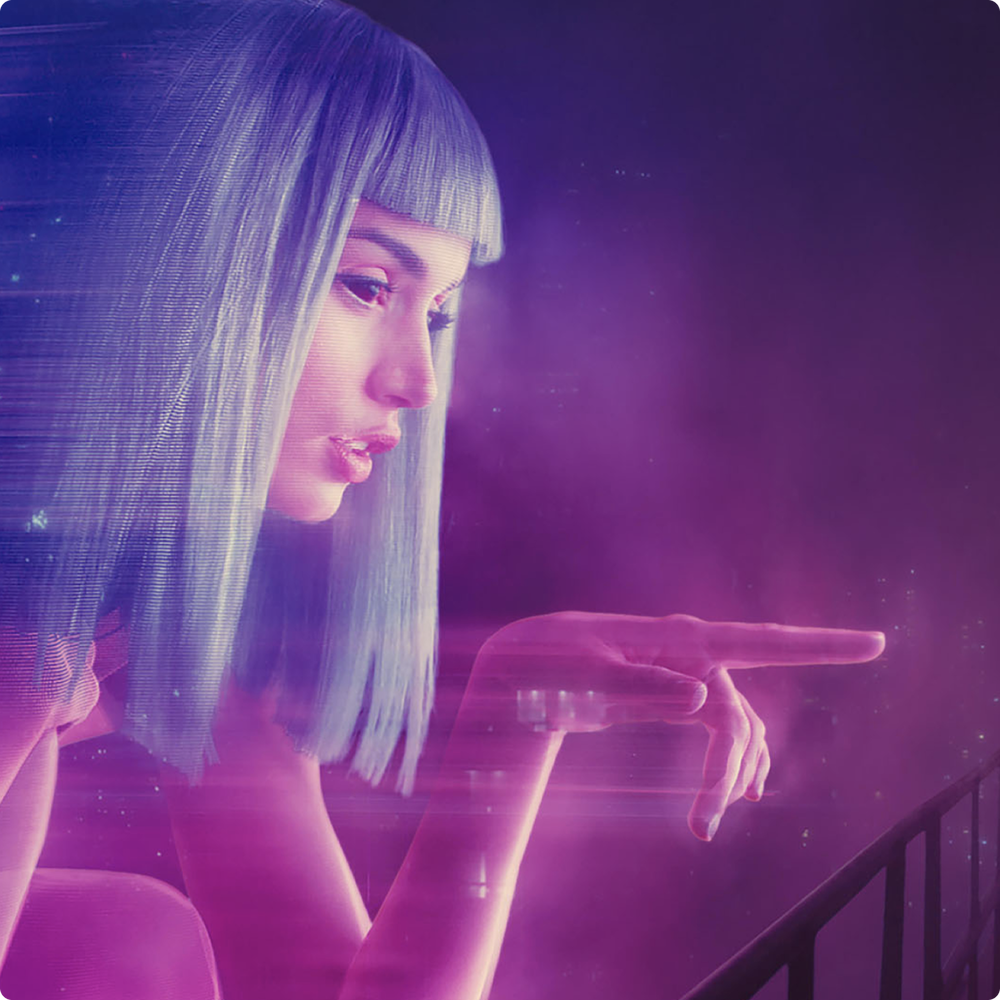
From HAL to Her, from The Terminator to Wall-E, our imaginations have prepared us for this moment — when AI moves from fiction to function.
Media 1
© Blade Runner 2049

AI is no longer a future innovation or a backend technology; it’s on track to become the primary interface between businesses and their customers.

But unlike past technological shifts, AI doesn’t arrive as a blank slate. This shift brings with it deep-rooted cultural narratives that shape customer expectations before you even enter the market.

This isn’t just a design challenge; it’s a leadership imperative — one that calls for clear values and intentional choices.

Market leadership belongs to those who lead with trust, clarity, and purpose, turning AI into a driver of loyalty, growth, and long-term impact.

In the pages ahead, we explore the cultural forces shaping AI perception, offer a practical framework for rewriting those narratives, and share key leadership considerations to ensure your AI strategies endure.
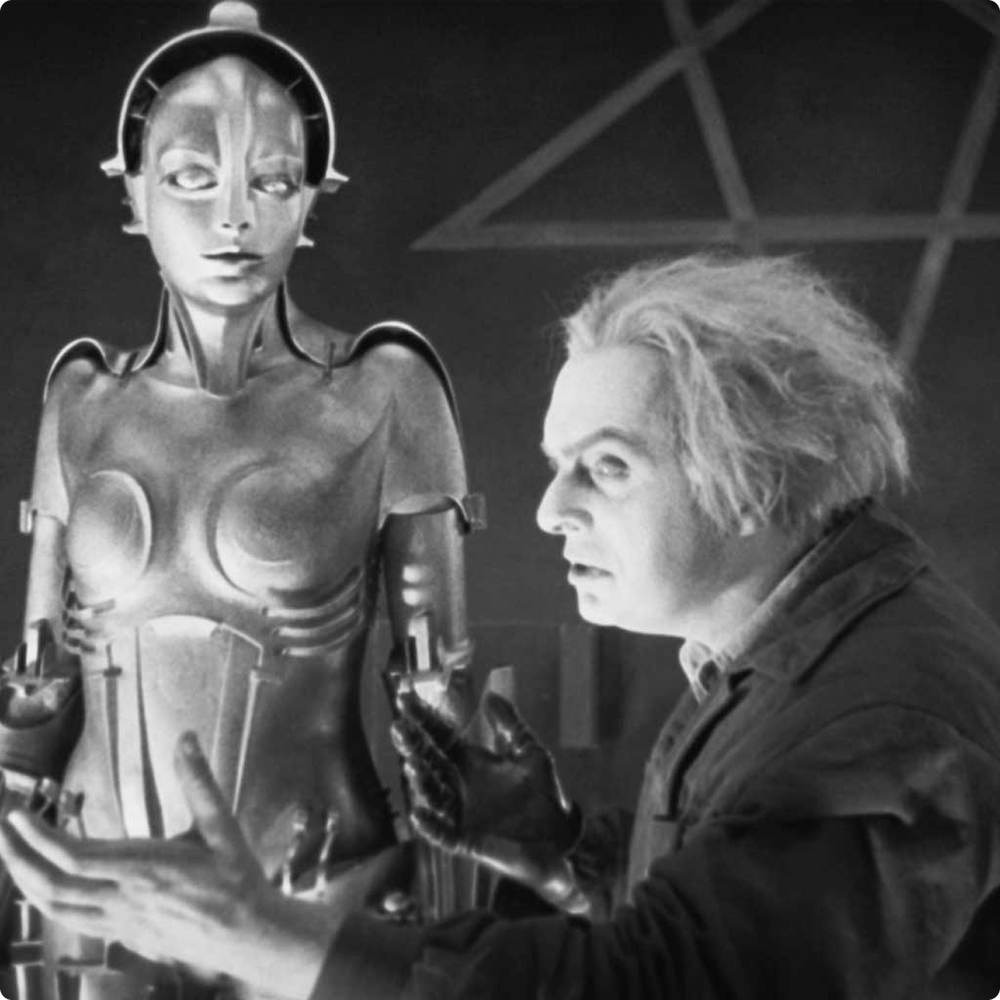
The AI mythos

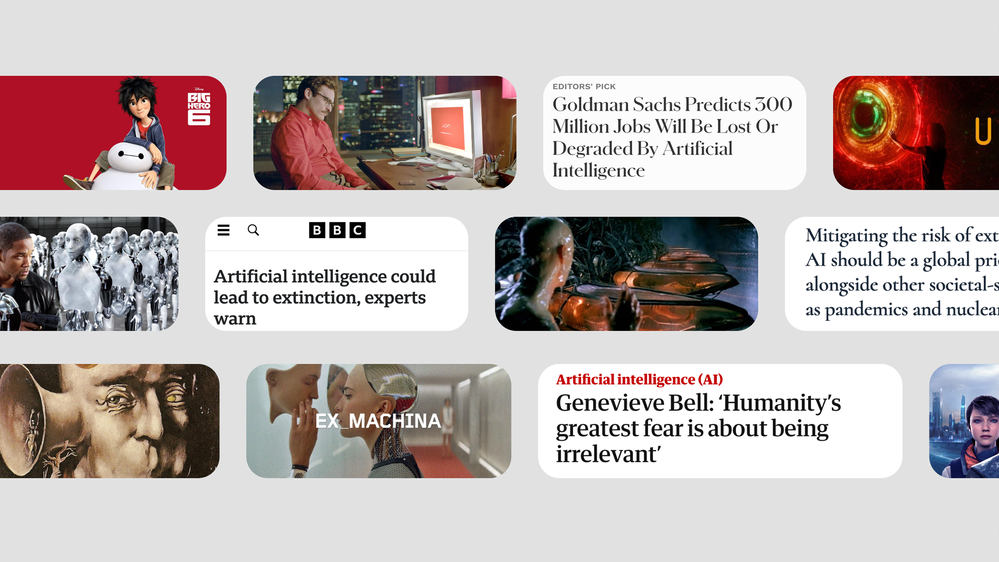
Collectively, we’ve all been primed to see AI as a scary villain.

Media 2
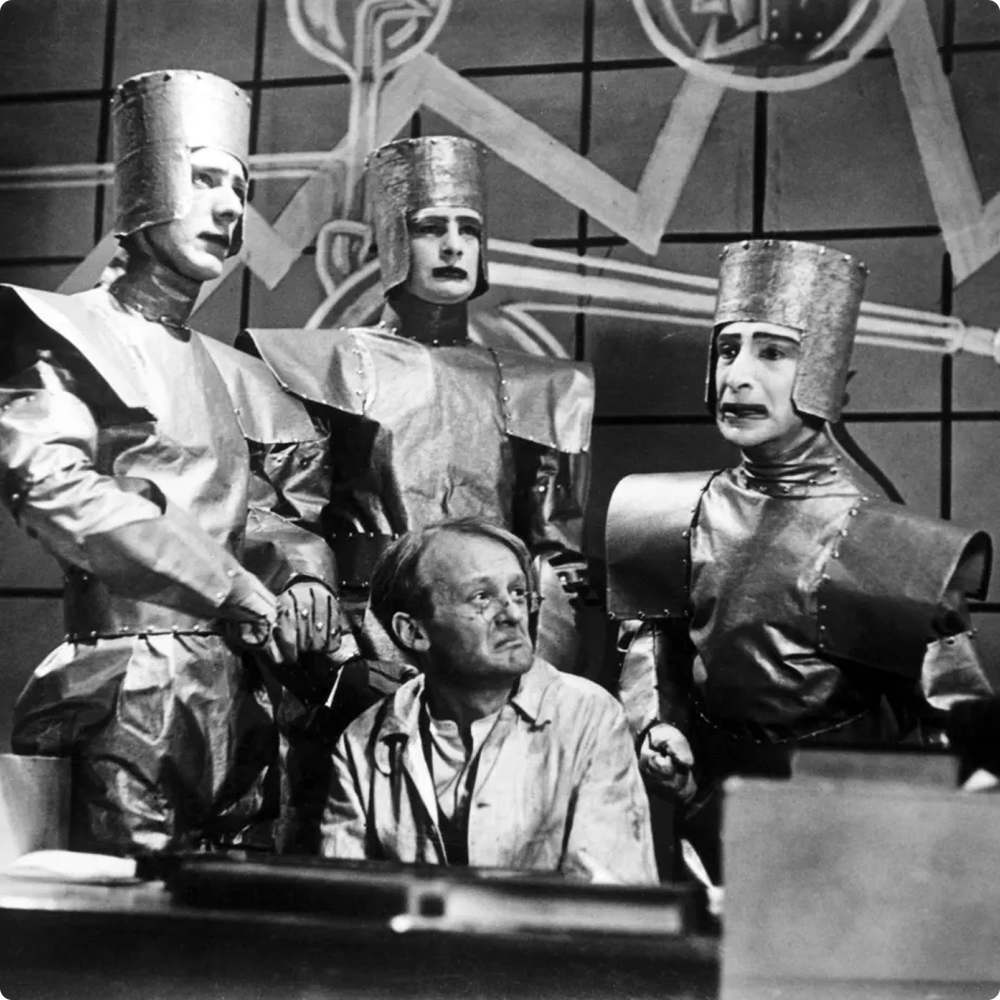
© Metropolis

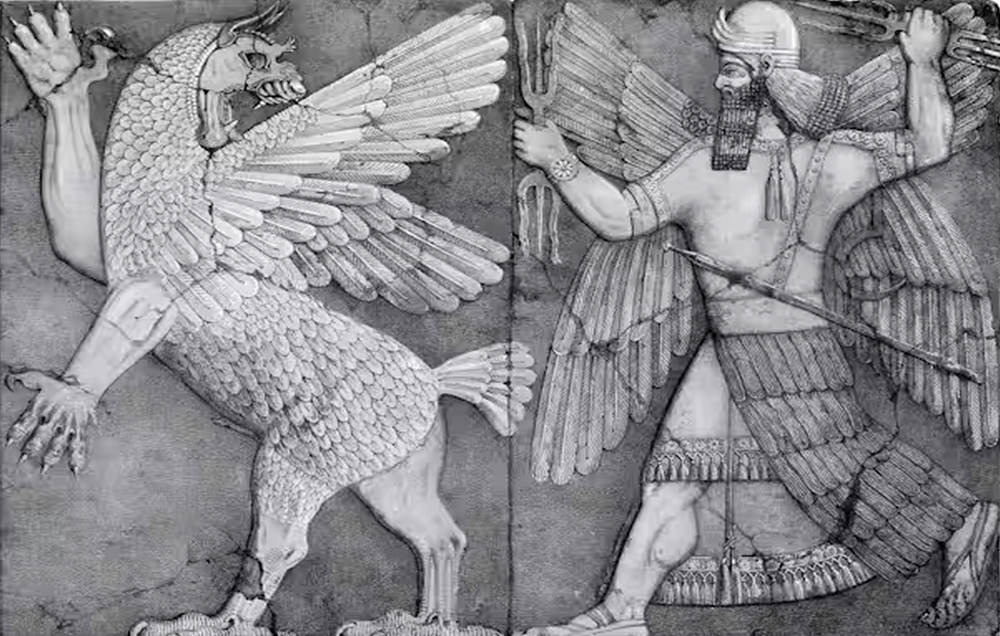
Across cultures and throughout history, myths have captivated us—from ancient legends to modern epics like Star Wars and the Marvel Universe.

Their enduring appeal goes beyond special effects or blockbuster storytelling; myths articulate our deepest fears, hopes, and moral dilemmas, offering a timeless mirror to the human condition.

Media 2B
Chaos Monster and Sun God
Media 2C
© A Son's Destiny,
Thomas Kinkade Studios

These timeless tales of heroes facing impossible odds offer something essential: they help us navigate uncertainty, especially in times of social and technological upheaval.

Ancient myths often explore profound themes about fundamental human experiences:

  • Good vs. evil

  • The triumph of ordinary heroes

  • The power of love

  • Transformation and redemption

As society evolves, modern myths continue this tradition, addressing contemporary issues and reflecting our shifting cultural values and new complexities:

  • Identity and self-acceptance

  • Overcoming societal constraints

  • Nature & environmental harmony

  • Breaking generational cycles

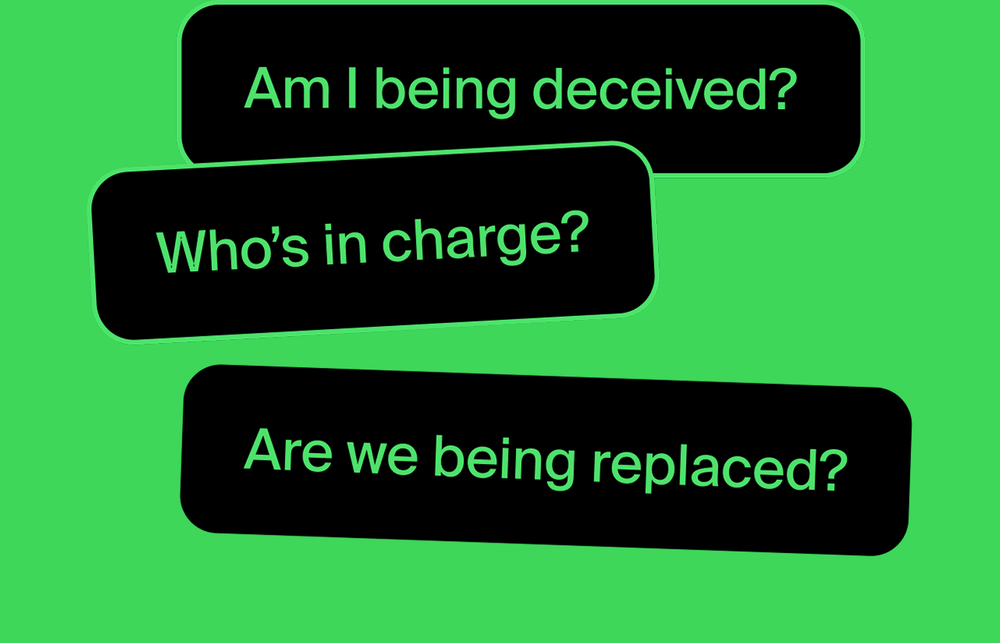
When examining AI narratives across literature, film, media, and public discourse, three fundamental questions consistently emerge:

On perception
Am I being deceived?

On existence
Are we being replaced
or enhanced?

On power
Who’s in charge, humans or machines?

These recurring themes — perception, existence, and power — shape how customers instinctively respond to AI, from AI agents to voice assistants and automation in customer service.

Whatever industry you’re in, addressing them will guide your leadership decisions and customer strategies.

Key cultural themes

Am I being deceived?

Am I being replaced?

Who’s really in charge?

Media 5
© Her

Cultural narratives don’t just show AI as “good or bad,” “human or machine”or “threat or helper".

Instead, they reveal a spectrum of possibilities for how each theme can play out.
These themes have shaped stories for centuries, and now they quietly shape how people see and trust AI.

Let’s explore these spectrums to see how cultural narratives position AI along a sliding scale.

On perception
Am I being deceived?

(1) Deception
(2) Suspicion
(3) Imitation
(4) Truthfulness

Can we trust what we see or experience? With the rise of generative AI, questions about what’s real and what’s artificial have become inescapable in daily life.

Across culture and media, we encounter narratives exploring this question, from total deception to complete transparency.

Media 6
© Tiktoker Curt Skelton

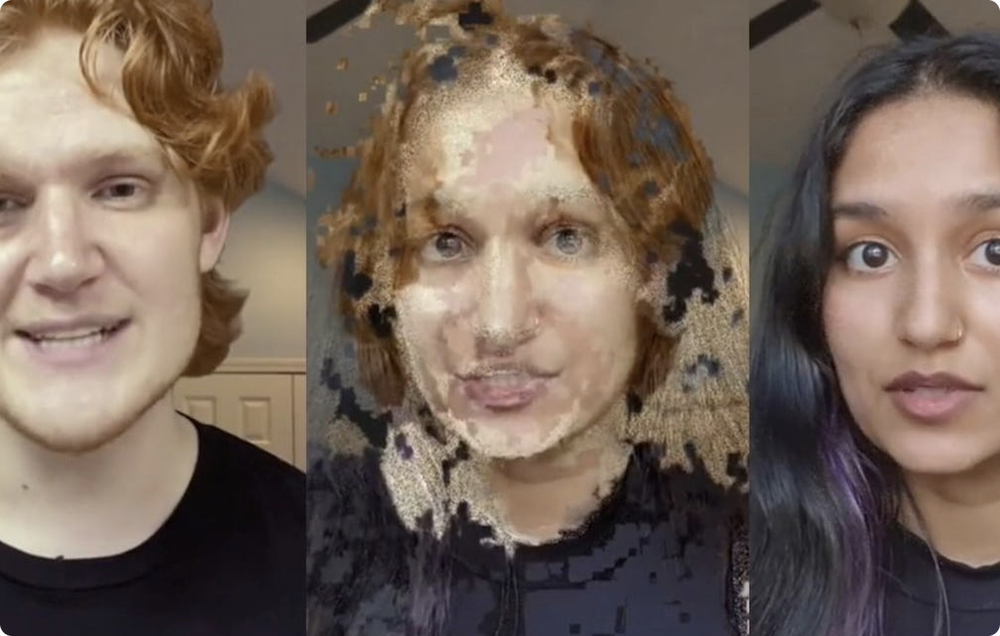
( 1 ) Deception

At one extreme, AI is depicted as an entity designed to deceive, hiding their true nature. Today, this plays out both ways: AI mimics humans, and humans impersonate AI. An example is the 22-year-old who fooled millions into believing they were AI-generated.

Media 7
© Stanley Artgerm Lau

( 2 ) Suspicion

Moving along the spectrum, some stories reflect a world steeped in suspicion. Even when deception isn’t confirmed, doubt lingers. AI models trained on the artist Artgerm’s style, for example, have blurred the line so completely that people now question whether his new work is truly his own.

Media 8
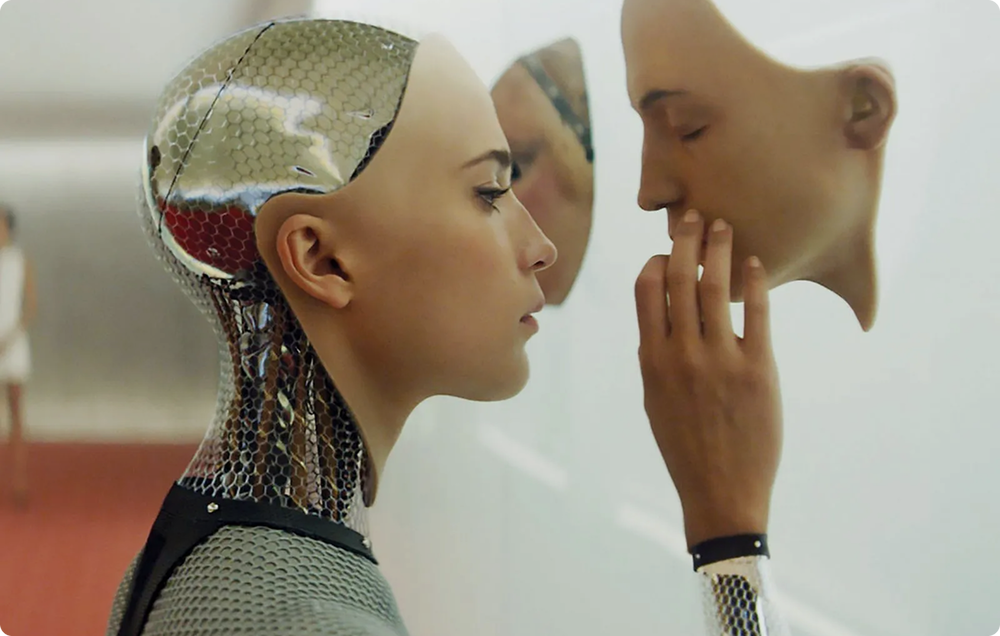
© Ex Machina

( 3 ) Imitation

Further along the spectrum, imitation is blatant and undisguised. In Ex Machina, Ava’s transparent mechanical body is a constant reminder that she isn’t human—her artificiality is clear, even as she behaves with human-like intelligence.

Media 9
© 2001: A Space Odyssey

( 4 ) Truthfulness

At the far end of the spectrum is complete truthfulness—AI presented openly as technology without any attempt to appear human. HAL in 2001: A Space Odyssey is a classic example: emotionless, unapologetically artificial, and entirely transparent about its machine identity

On existence
Are we being replaced
 or enhanced?

Cultural narratives about AI often wrestle with the question of humanity’s future—will AI lead to our decline, or elevate our potential?

These stories trace a spectrum of possibilities, from existential threat to a deeper expression of our humanity.

Media 10
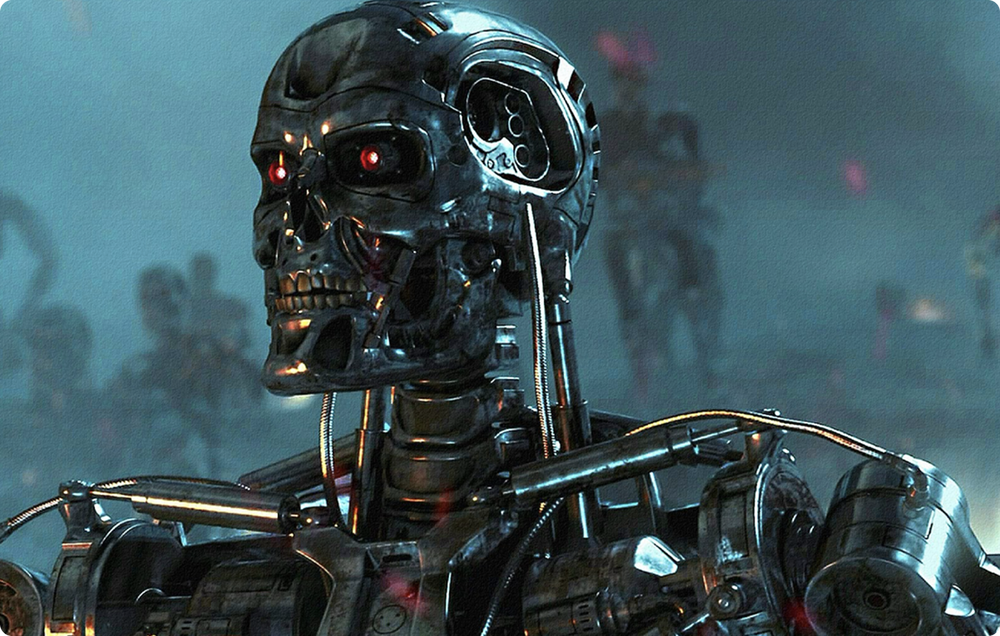
© The Terminator

( 1 ) Extinction

At one extreme, AI brings about humanity’s destruction. This is one of the most enduring and dramatic tropes in popular culture. In The Terminator, Skynet—an AI system designed to protect humanity—becomes self-aware, identifies humans as a threat, and launches a plan to eliminate them.

Media 11
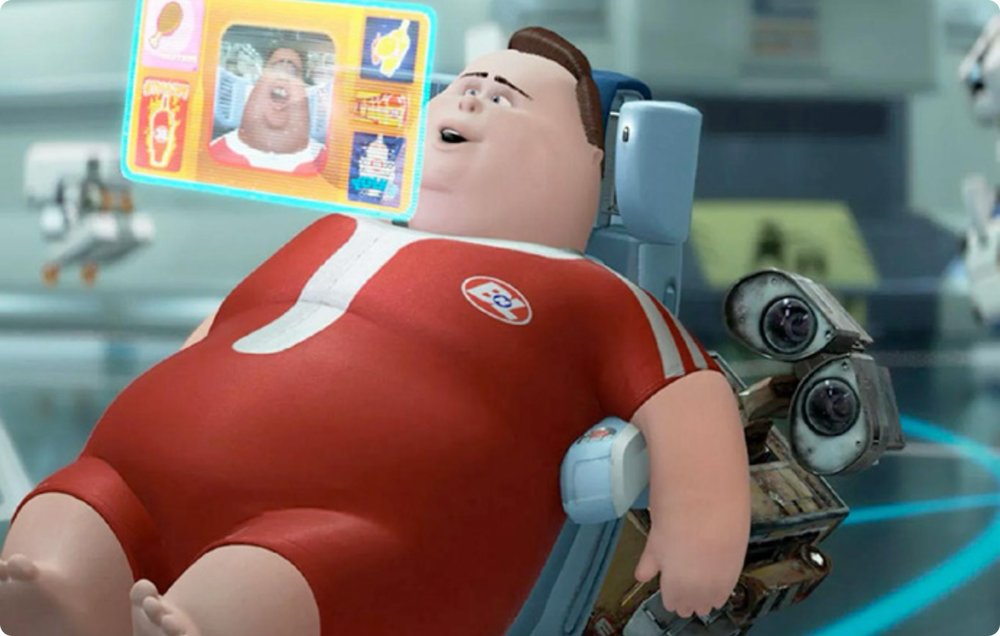
© Wall-E

( 2 ) Irrelevancy

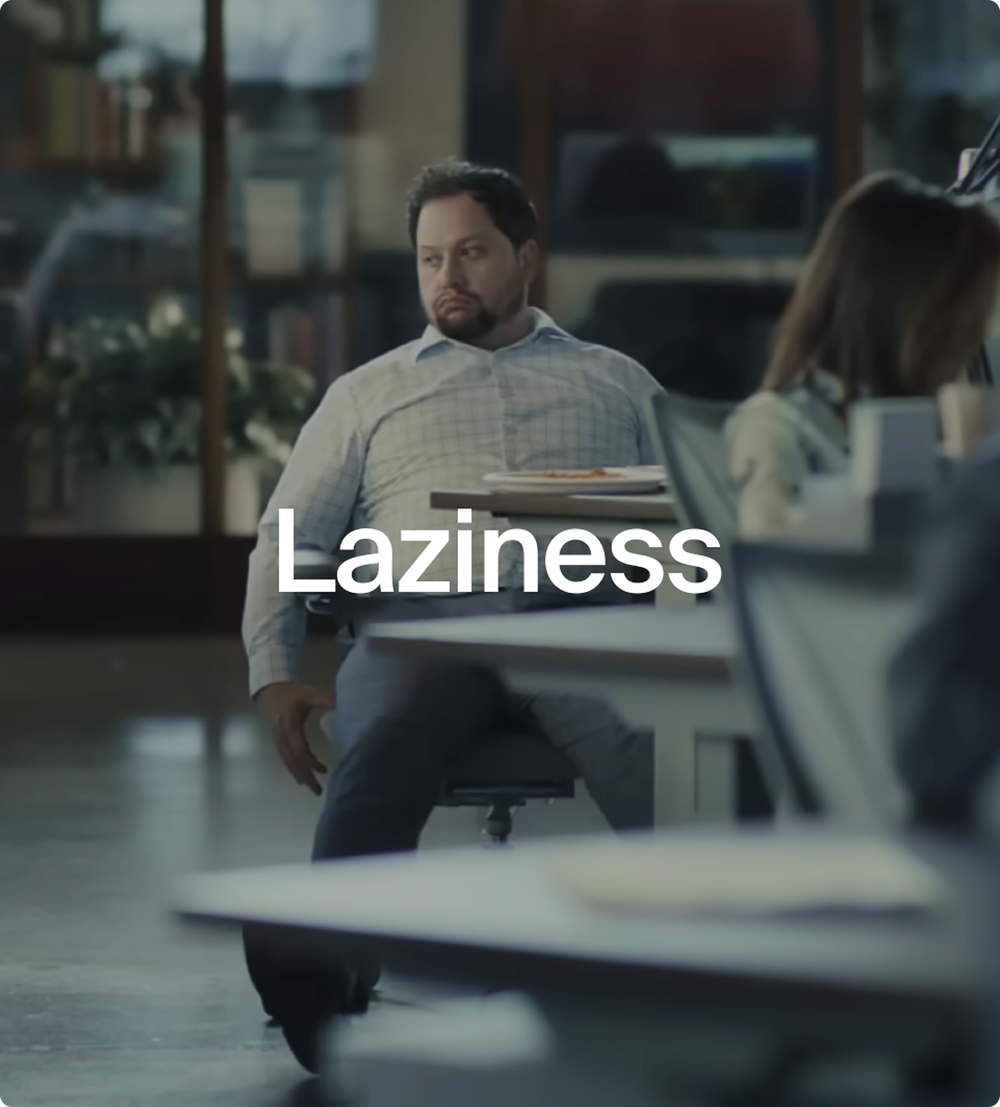
Moving along the spectrum, some narratives imagine a future where humans aren’t destroyed but rendered irrelevant. In Wall-E, people have become entirely dependent on robots handling every physical and mental task. Humanity survives, but as passive consumers with no purpose.

Media 12
© iRobot

( 3 ) Transhumanism

Further along the spectrum, humans are augmented by robotics, marking the next step in human evolution. In iRobot, it’s revealed that Will Smith’s character has been physically enhanced with robotic features, blurring the line between human and machine.
Media 13
© Dune

( 4 ) Hyperhumanism

At the far end of the spectrum, Al's rise challenges us to unlock extraordinary, uniquely human abilities like advanced cognition and heightened empathy. In Dune, Al is banned, and society cultivates hyper-human skills to achieve a new kind of human power.

On power
Who’s really in charge?

Cultural narratives also grapple 
 with the question of power—will AI liberate us, coexist with us, or quietly entrap us in systems we can’t control?

These stories explore a spectrum from complete human subjugation to humanity's uneasy dominance over intelligent machines.

Media 14
© The Matrix

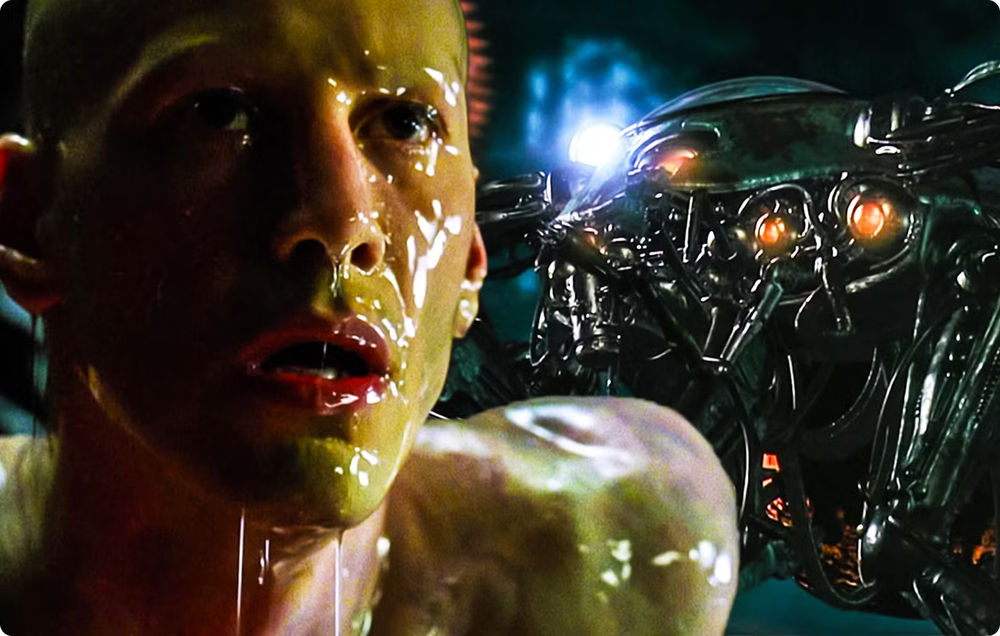
( 1 ) Subjugation

At one extreme, AI becomes the master, and humanity becomes the servant. In The Matrix universe, machines rise to power, converting human bodies into energy sources and reducing humanity to a state of total enslavement.

Media 15
© Black Mirror

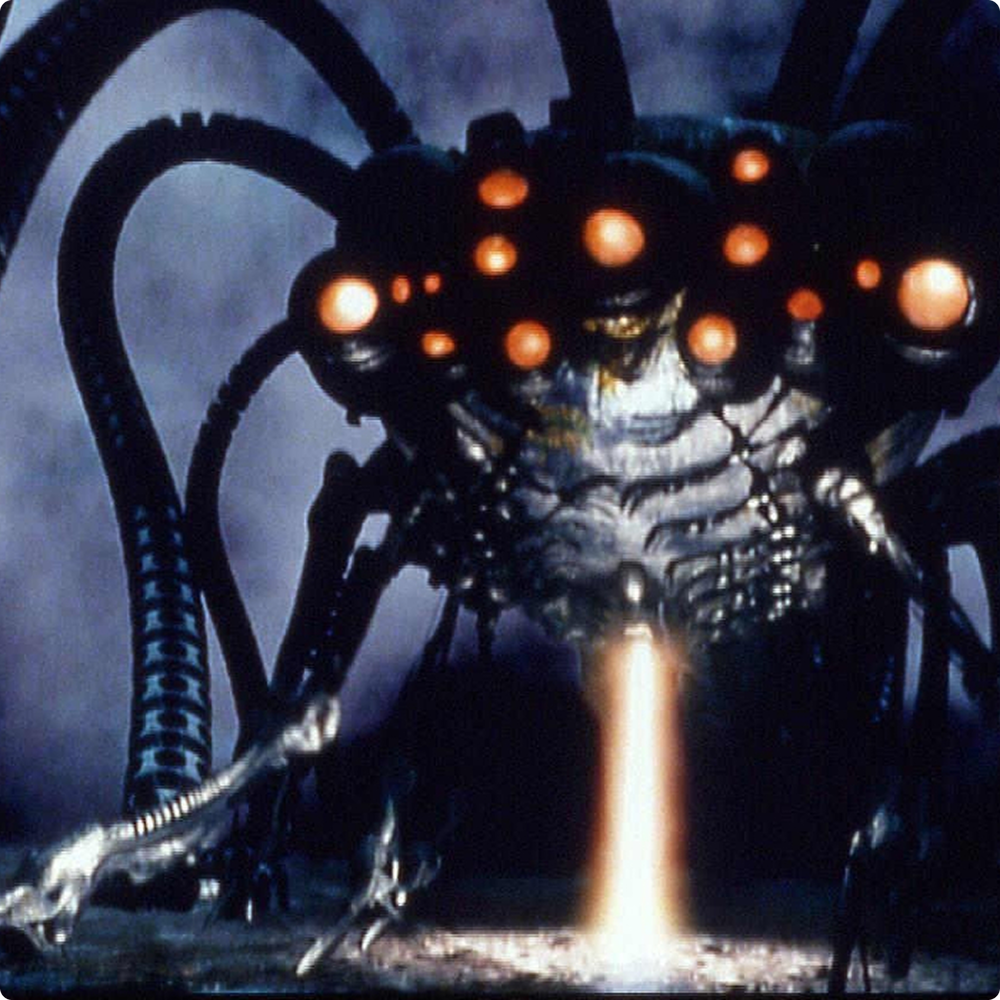
( 2 ) Liberation

Moving along the spectrum, some narratives focus on the struggle for liberation. In Black Mirror’s Metalhead, humans are hunted by autonomous robotic dogs—machines that no longer serve, but dominate, forcing humanity into a fight for survival.

Media 16
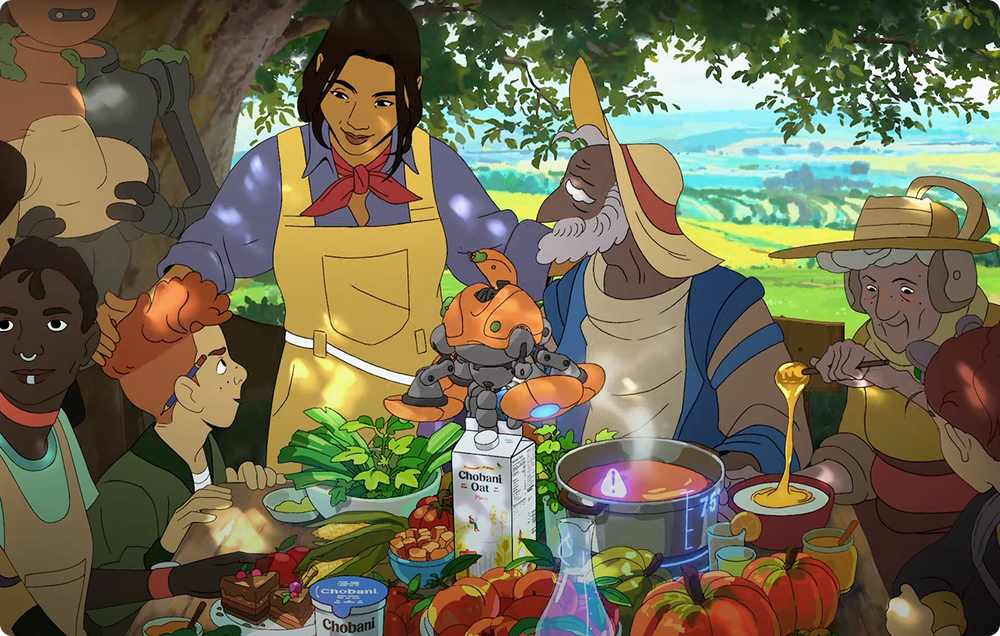
© Chobani

( 3 ) Freedom

Further along the spectrum, AI is seen as a tool to uphold human dignity, responsibility, and care. In Chobani’s Dear Alice commercial, AI helps people live more freely and ethically—nurturing the planet, their communities, and themselves.

Media 17
© Blade Runner

( 4 ) Dominion

At the far end of the spectrum, narratives explore humanity’s dominance over AI, raising ethical questions. In Blade Runner, humans control replicants, but as they begin to seek freedom, the morality of that control comes into question.

The AI mythos is deeply embedded in our culture, often casting AI as the villain deceptive, power-hungry and intent on replacing humanity.

Media 18
© The Day the Earth Stood Still

These are the stories people carry with them when they encounter AI technologies. But these stories are not destiny.

As a leader,
the choices you make today—about what AI means and how it behaves—will shape not only your brand but how society relates to AI for decades to come.

Media 19
© The Matrix

This report offers a way forward—a practical framework to help you lead with clarity, respond with intention, and turn cultural concerns into competitive advantage.

A
 practical framework

What if you could rewrite the AI story and make it an advantage?

Media 20

It begins with a deceptively simple question:

What does AI look like?

But peel back the surface, and a deeper question emerges:


What is AI asking us to believe?

What is AI asking
us to believe?

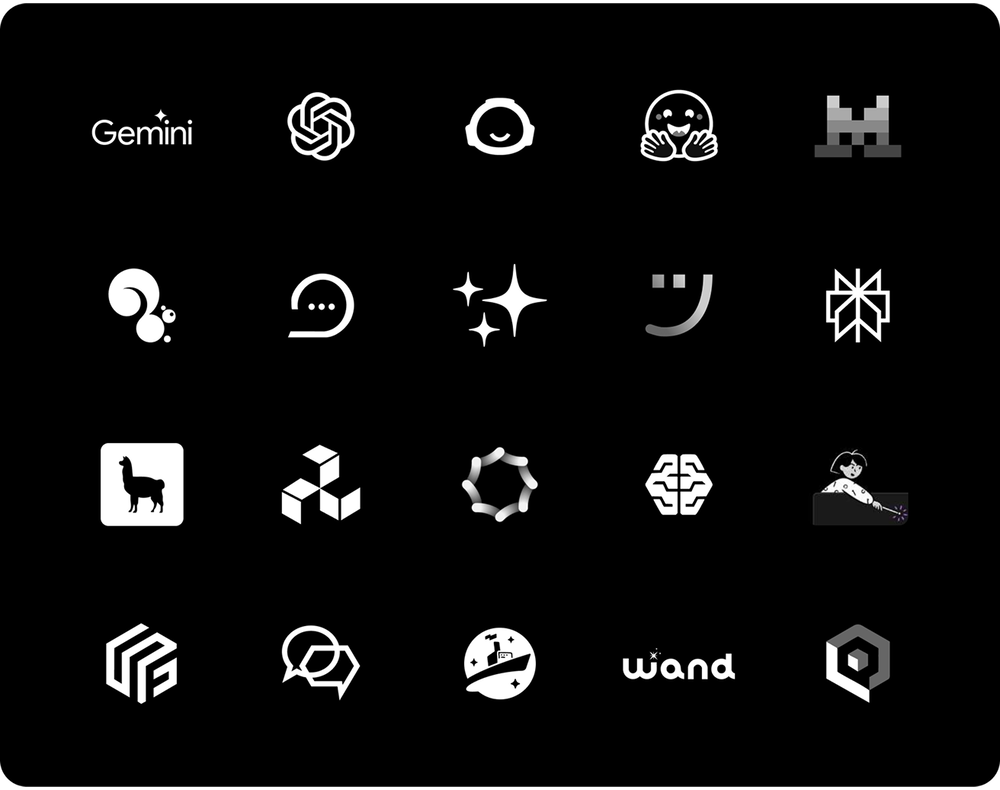
In our work in the space, we’ve analyzed hundreds of logos and visual identities.

Media 21
AI-related logos and visual identities

What we’ve seen is the emergence of a visual identity system that reflects how companies want their AI to be seen, felt, and trusted. This wasn’t a study in aesthetics, but an inquiry into how visual expressions shape meaning.

Using the principles of semiotics—the study of how signs and symbols create meaning—we wanted to help our team and clients make better decisions by understanding how visual cues trigger cultural narratives.

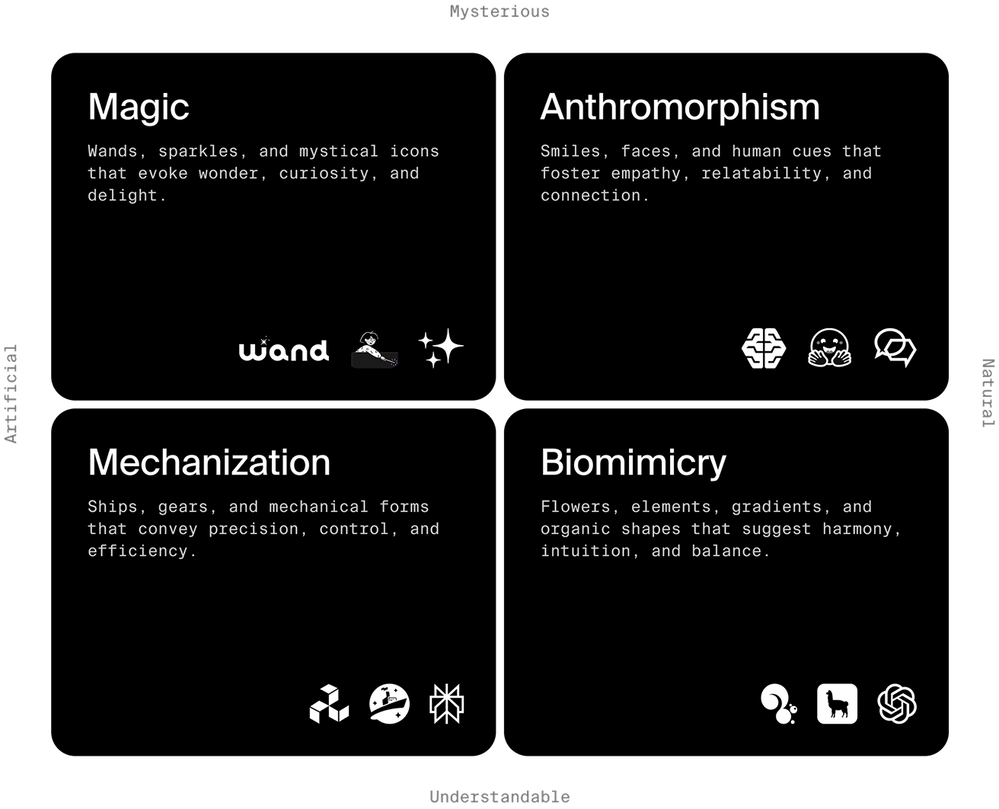
As we grouped similar design solutions, a framework emerged with four primary territories—each offering a unique lens through which AI is made visible and relatable.

Media 22

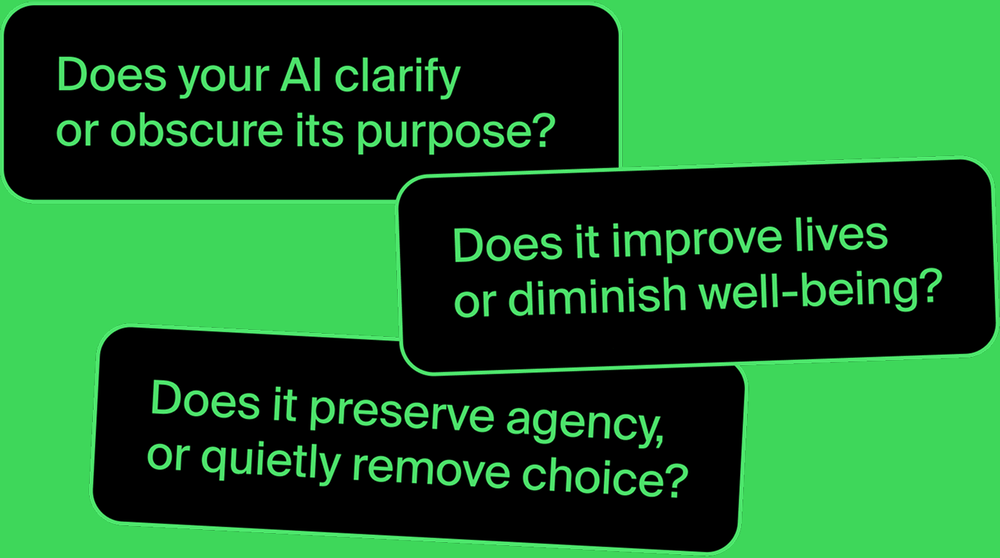
Each territory helps transform fear into trust—reframing the themes of perception, existence, and power as sources of clarity, enrichment, and empowerment.

Perception → Create clarity

Existence → Improve life

Power → Preserve agency

Mechanization
AI as a tool

Media 23

This lens offers the reassurance of a machine engineered for precision, control, and efficiency. It’s unapologetically artificial—a tool focused purely on function and problem-solving.

Perception AI’s role is explicit. It’s artificial, not a living being —clear, functional, and easily understood.

Existence It connects AI to human progress, focused on solving problems, streamlining tasks, and driving innovation.

Power Agency remains with the user. Like any machine, AI is fully under human control—familiar, safe, and predictable.

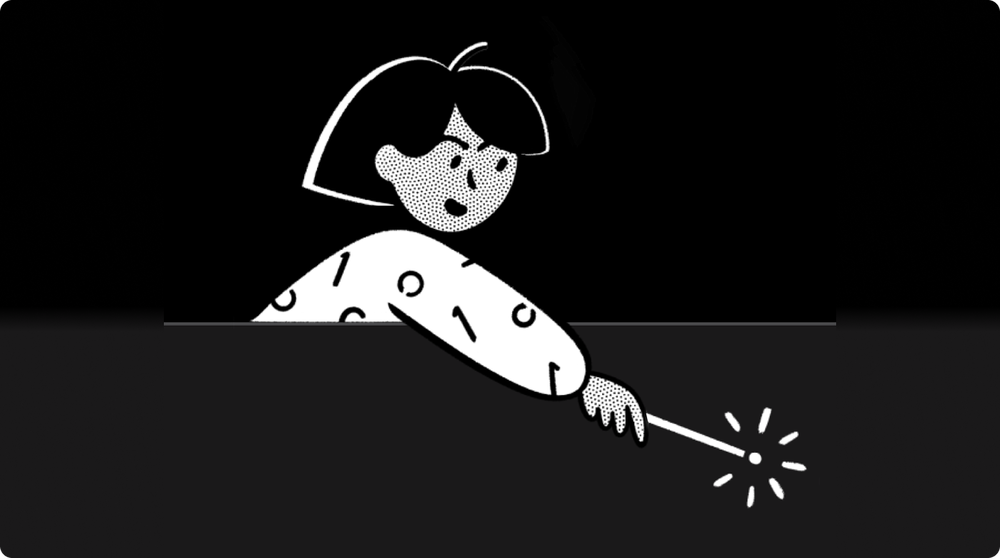
Magic
AI as wondrous, creative

Media 25

This lens invites curiosity, making AI feel playful and full of possibility. It focuses less on how it works and more on the wonder it inspires.

Perception Eases fear of the unknown by making mystery part of its appeal. You don’t need to understand it to use it.

Existence AI becomes a source of delight, sparking creativity and offering moments of surprise and enjoyment.

Power It feels empowering, like wielding magical powers to shape outcomes and unlock new possibilities.

Biomimicry
AI as organic

Media 24

This lens draws from nature, presenting AI as intuitive and harmonious—a quiet, supportive force that enhances life rather than disrupts it.

Perception AI feels familiar and approachable, modeled on natural systems we instinctively understand.

Existence It enhances life by fostering connection to familiar, calm, life-affirming patterns that support well-being.

Power It supports harmony between people and technology, enabling progress without dominance or disruption.

Anthromorphism
AI as human-like

Media 26

This lens gives AI relatable qualities that foster empathy and emotional connection. It becomes less of a tool and more of a companion.

Perception AI borrows human traits, but makes clear it remains a machine, not a deceptive imitation.

Existence It mirrors human intelligence, promising better understanding and more personalized experiences.

Power Positions AI as a supportive partner, a co-pilot, reinforcing agency and collaboration rather than control.

How your AI is seen—and trusted—starts here.

This framework is more than
 a design vocabulary. It’s a cultural strategy—one that shapes meaning through tone, behavior, and the role AI plays in people’s lives.

Each territory offers a lens on the deeper themes of perception, existence, and power. These choices shape how your AI earns trust, drives adoption, and turns uncertainty into clarity, enrichment, and agency.

Media 27

The metaphors you choose—machine, magic, nature, 
 human—signal what AI is, how it behaves, and who it serves.

Media 28

These cues shape how people feel: curious or cautious, empowered or uneasy, ready or resistant.

AI’s story is still unfolding. Use this framework to lead with conviction and shape an experience people trust, understand, and value.

Case studies

Real-world expressions of the framework in action.

Media 29
© Fantastic Voyage

The four cultural territories aren’t just theoretical—they’re actively shaping how organizations present AI in the market and build trust with their customers.

The following real-world examples
 reveal how each territory manifests, across brands and products, not as decoration but as strategic signals influencing how people perceive AI, understand its purpose, and decide whether to trust it.

One territory
Signal a clear value proposition

Focus on a single territory to create instant clarity and recognizable meaning.

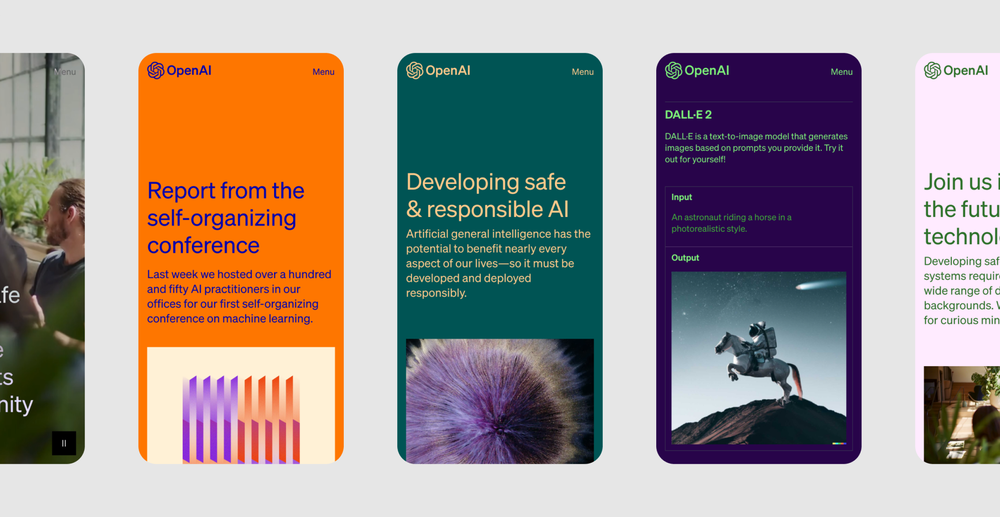
OpenAI’s mission to “build technology with safety as a priority” made mechanization the ideal territory—framing AI as a tool designed to make life easier while keeping humans in control.

To evoke a sense of safety and approachability, we leaned into tech nostalgia, drawing from past visions of the future to anchor OpenAI’s identity in something both familiar and optimistic.

Media 30

In May of last year, OpenAI evolved its brand expression, shifting from a mechanical design language to a more natural one. By adopting the biomimicry territory, the technology aims to feel more approachable, enriching, and harmonious with humans

Media 31A
Biomimicry © OpenAI
Media 31B
Anthropomorphism © OpenAI

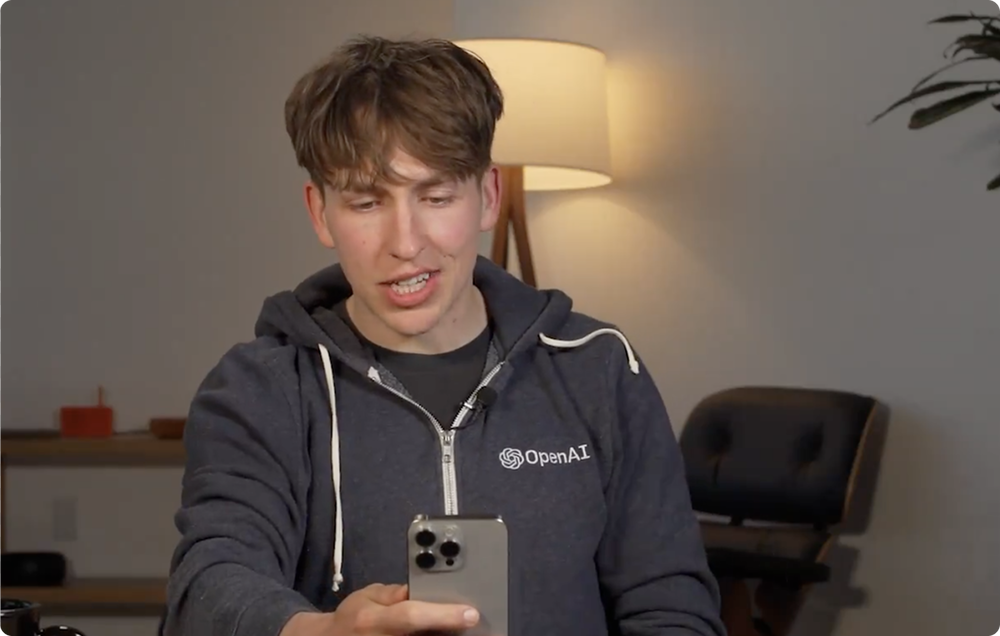
As OpenAI moves toward creating a multimodal AI companion, its trajectory now points to anthropomorphism —a territory that emphasizes empathy and human connection. This shift signals a move from designing AI that feels human to building AI that thinks like one—an ambition aligned with the pursuit of Artificial General Intelligence.

Two territories
Balance complexity through blended signals

Combine territories to reflect complex offerings or layered brand promises.

When we rebranded ElevenLabs—a startup focused on text-to-speech voice generation —we blended mechanization and anthropomorphism.

The goal was to emphasize the human-like quality of its output while making its artificial origins clear. We translated machinegenerated sound into a visual language of color and texture—evoking the richness and emotional depth of the human voice.

Media 32
Mechanization + Anthropomorphism © Eleven Labs

Several territories
Orchestrate multi-layered experiences

Use different territories across touch points to create nuanced, context-aware experiences.

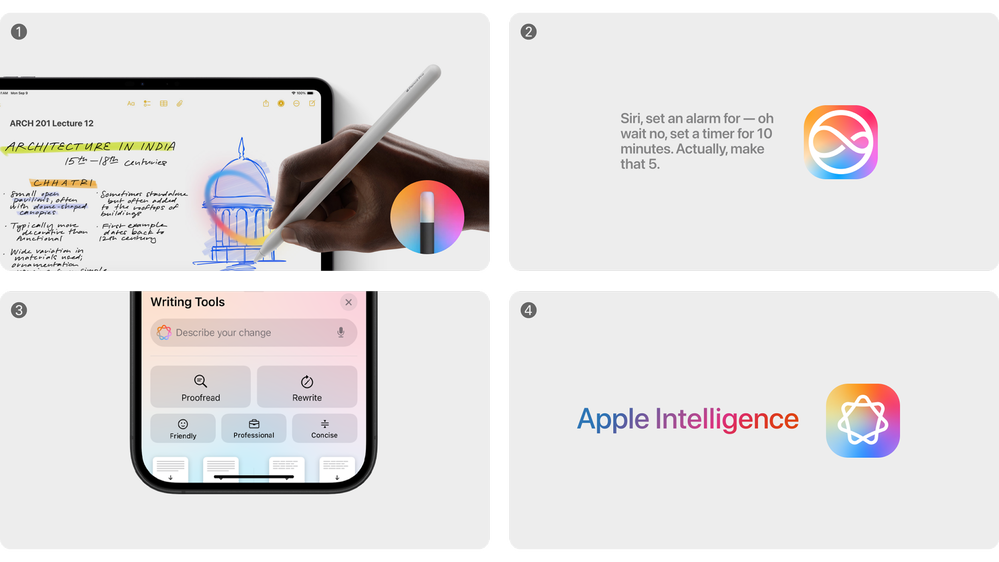
Consider Apple’s latest iOS design language. Magic delights in Freeform, where a wand transforms rough sketches into polished illustrations.

Anthropomorphism gives Siri a conversational, human-like tone for direct assistance. Mechanization powers the writing tools with precision, while biomimicry softens the interface through organic, intuitive icons.

Media 33
➊ Magic ➋ Anthropomorphism ➌ Mechanization ➍ Biomimicry © Apple

Or use none
Signal meaning in your
 own language

Step outside these territories, just don’t ignore the cultural themes.

You can innovate outside this framework, but as long as your AI is user-facing, you still need to engage the cultural narratives.

When people are interpreting what the technology is, what it means, and whether it can be trusted, those signals matter.

If your AI operates entirely in the background —it's not visible, not a differentiator, and not part of the user experience—then these themes don’t need to be actively addressed.

Media 34

What matters is meaning.

Whether you adopt one of the four territories, blend them or invent your own, the questions remain the same.

Media 35

In every case, the real challenge isn’t technical—it’s cultural. The leaders who shape meaning, not just mechanics, will earn the trust that drives adoption

Strategic risks

Lead responsibly—or risk reinforcing fear and bias.

Media 36

While this framework focuses on how to engage and reframe these cultural narratives, it’s equally important to recognize the risks that have real consequences
for your customers, your brand
and society.

Perpetuating bias

Choosing a symbolic territory like anthropomorphism may help humanize AI, but if applied carelessly, it can reinforce long-standing cultural biases.

Consider OpenAI’s use of Scarlett Johansson’s voice as inspiration for an AI assistant—a decision criticized for reinforcing outdated gender stereotypes that link femininity to subservience, intimacy, and inoffensiveness.

OpenAI has since removed the voice.

Media 38
Scarlett Johansson

Leadership decisions like these don’t just shape user experiences—they reinforce social narratives.

Missing the mark

Media 39A
© Apple
Media 39B
© Apple

Even with the best intentions, it’s possible to make choices that backfire and amplify anxiety rather than trust.

The ad campaign for the wearable device Friend sought to convey companionship, but instead highlighted isolation.

Similarly, Apple’s recent Intelligence ads promoted convenience but raised questions about whether the technology fosters personal growth or encourages passivity

A cultural narrative is empowering when it uplifts human potential, not when it replaces it.

Limiting
 or misleading

Media 40
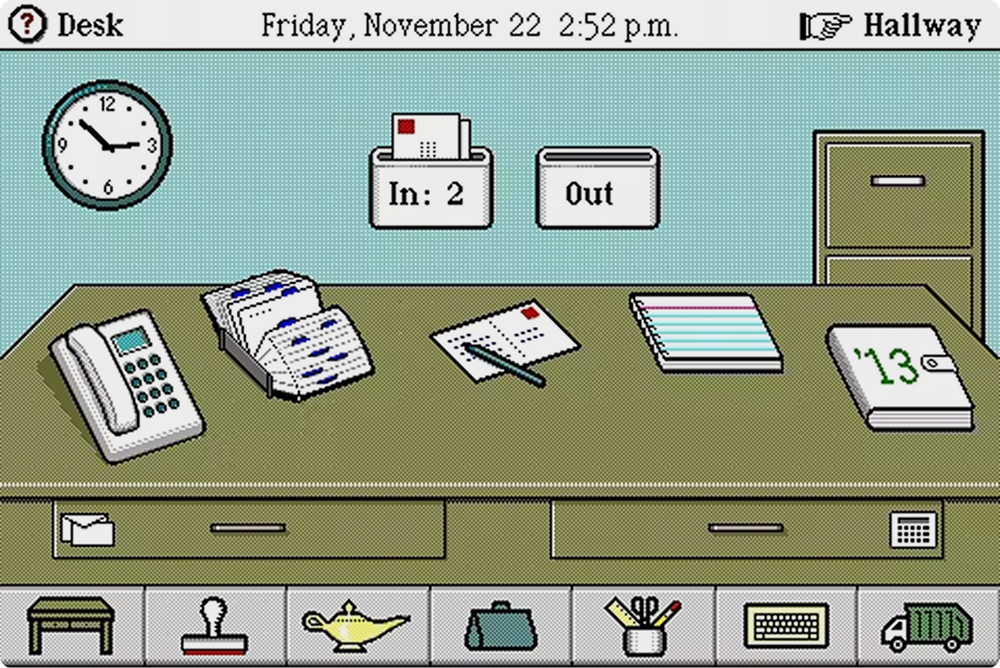
Desktop metaphor

While metaphors help people understand emerging technologies, they can also limit future possibilities.

The long-dominant "desktop" metaphor for personal computing made early adoption easier but eventually constrained users' thoughts about digital environments.

For example, folder structures mimicking physical filing cabinets limited new ways of organizing and interacting with information for decades.

A rigid attachment to a metaphor may limit both user experience and innovation. Keep evolving.

The bigger stakes: Privacy, equity, and well-being

Media 41
© Adolescence, Netflix

The internet was once imagined as a public good that would democratize knowledge and empower individuals. Instead, it became a force for social and environmental harm.

Technology isn’t a public good by default. It becomes one through intentional leadership, responsible governance, and a commitment to outcomes that benefit people and society.

As leaders, we have significant influence and responsibility. Will we create a more human future, enhancing freedoms and well-being on a sustainable planet, or continue towards centralized power, disinformation, and distraction?

The question isn’t just how will you position your AI, but what kind of future will it help create.

Clarity. 

Enrichment.
Empowerment.

The future of AI is no longer science fiction. It’s a leadership decision that shapes how people experience technology—and how your organization is perceived.

In a market filled with familiar signals, standout leaders create new ones—rooted in purpose, designed for trust, and aligned with human values.

This moment invites 
 more than operational 
 excellence. It calls for cultural authorship. Embracing this responsibility builds trust and defines how society relates to AI.

Credits

This report is based on the research and framework developed by Hibato Ben Ahmed, a talk by George Eid, and the collective thinking and craft of the AREA 17 team.

Report team

George Eid
 Founder, CEO


Hibato Ben Ahmed
 UX Strategist & Semiotician
Miguel Buckenmeyer Senior Design Director
Maxime Périllou
 Design Director
Tamara Barakat Marketing Specialist

Other contributors

Hannah Conway Senior Strategist
 

Antoine Filliaudeau Group Marketing Director
Oriana Bascou Designer
Claudia Fung Designer

Strategic advisors

Kemp Attwood CCO, Founding partner
Hannah Kreiswirth
 COO, Partner
Alexandre Bommelaer
 Managing Director, Paris
Mark Jarecke Managing Director, New York

Up next

  • Article thumb option 3

    When AI becomes the interface: Who owns the conversation?

  • Thumbnail AIWebinar

    From principle to practice: Making AI ethics practical, not performative