

National academies cover 3 4

National Academies National Academies

National Academies

Since 2024

Making scientific research accessible to all

The National Academies are a long-standing American nonprofit institution, bringing together experts across science, engineering, and medicine to produce independent research that informs public policy and legislative decision-making in the US. As a largely publicly funded organization, their mandate has always been rooted in public impact: making complex academic research accessible, digestible, and useful for a broad range of audiences—from government and media to researchers, donors, and the general public.

They came to AREA 17 at a pivotal moment. Their existing Oracle CMS was approaching end-of-life by the end of 2025, creating an urgent need to migrate an enormous body of content built over more than 150 years. But the CMS transition also presented a larger opportunity: to modernize how their website functioned as both a public-facing platform and an internal tool, improving workflows, scalability, and governance. Beyond the technical challenge, the organization needed to expand its reach, better communicate its value to sponsors and partners, and reintroduce itself as a trusted, mission-driven source of scientific truth at a time when public access to facts—and confidence in research—has become increasingly critical.

Reclaiming leadership by aligning brand, content, and experience

To help the National Academies build on their legacy of excellence, we elevated the brand to better capture the authority and impact of their work, modernizing the visual identity through a refreshed typography system and expanded color palette inspired by their publications.

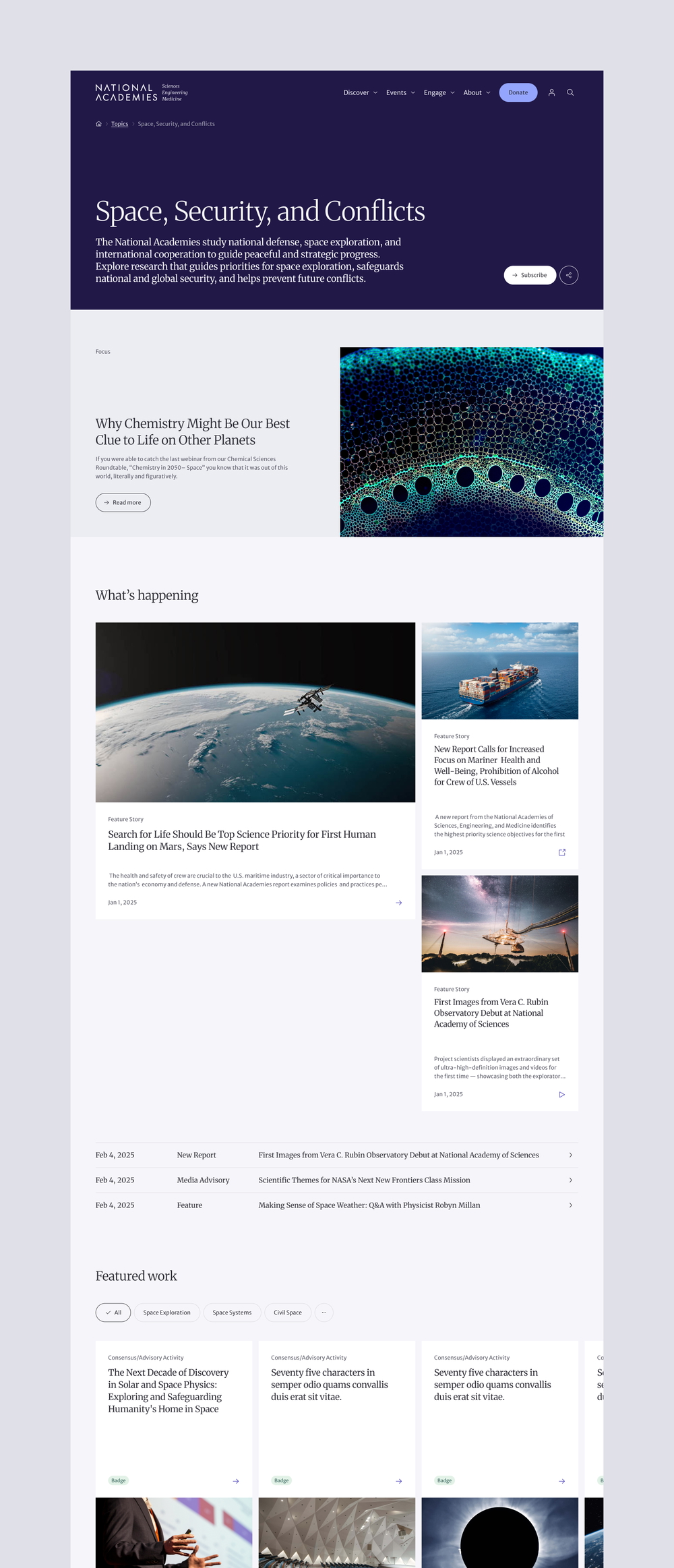
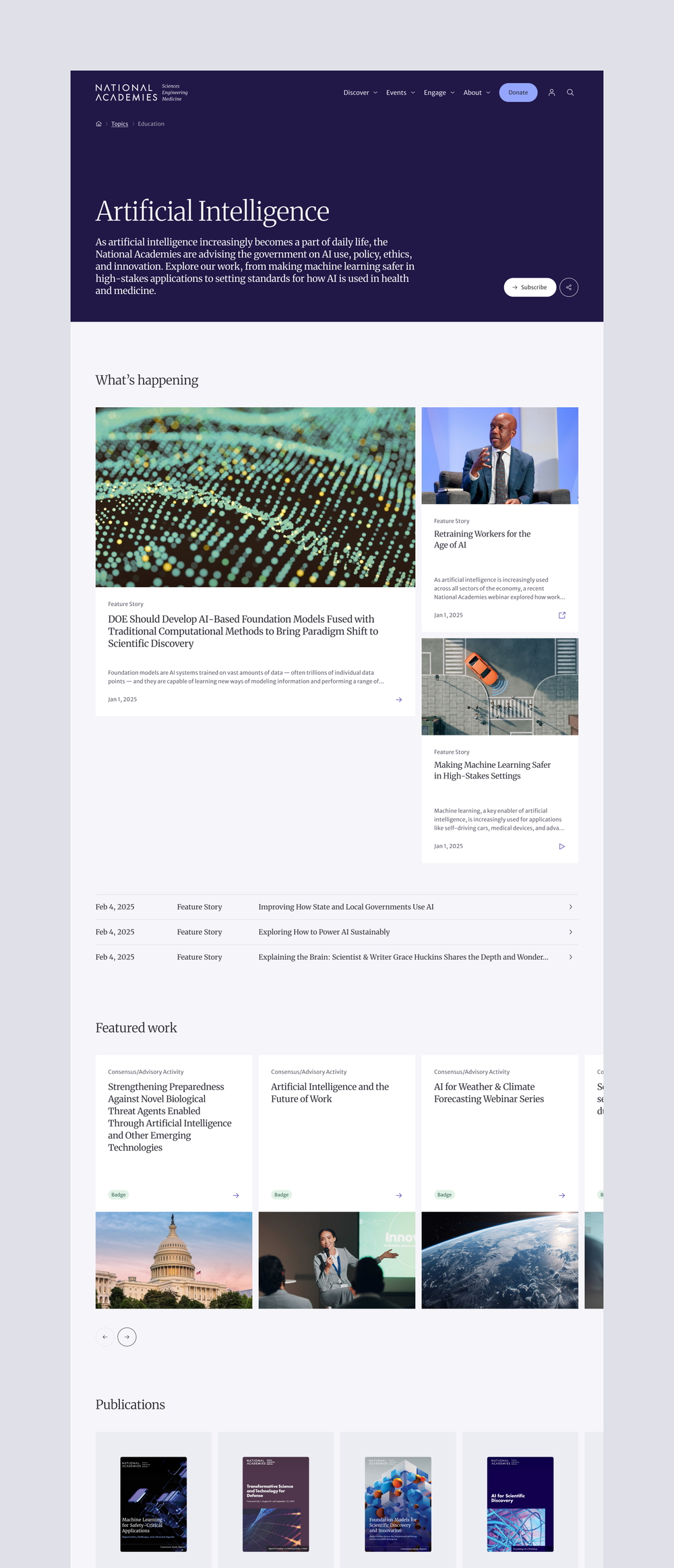
At the same time, the site was restructured to surface their most influential research more clearly, improving discoverability through topic-driven entry points and simplified paths across their content ecosystem.

By bringing together previously fragmented platforms and aligning the National Academies' brand more closely with its research and influence, the new experience reinforced their credibility and made their contributions more visible to their stakeholders and the public.

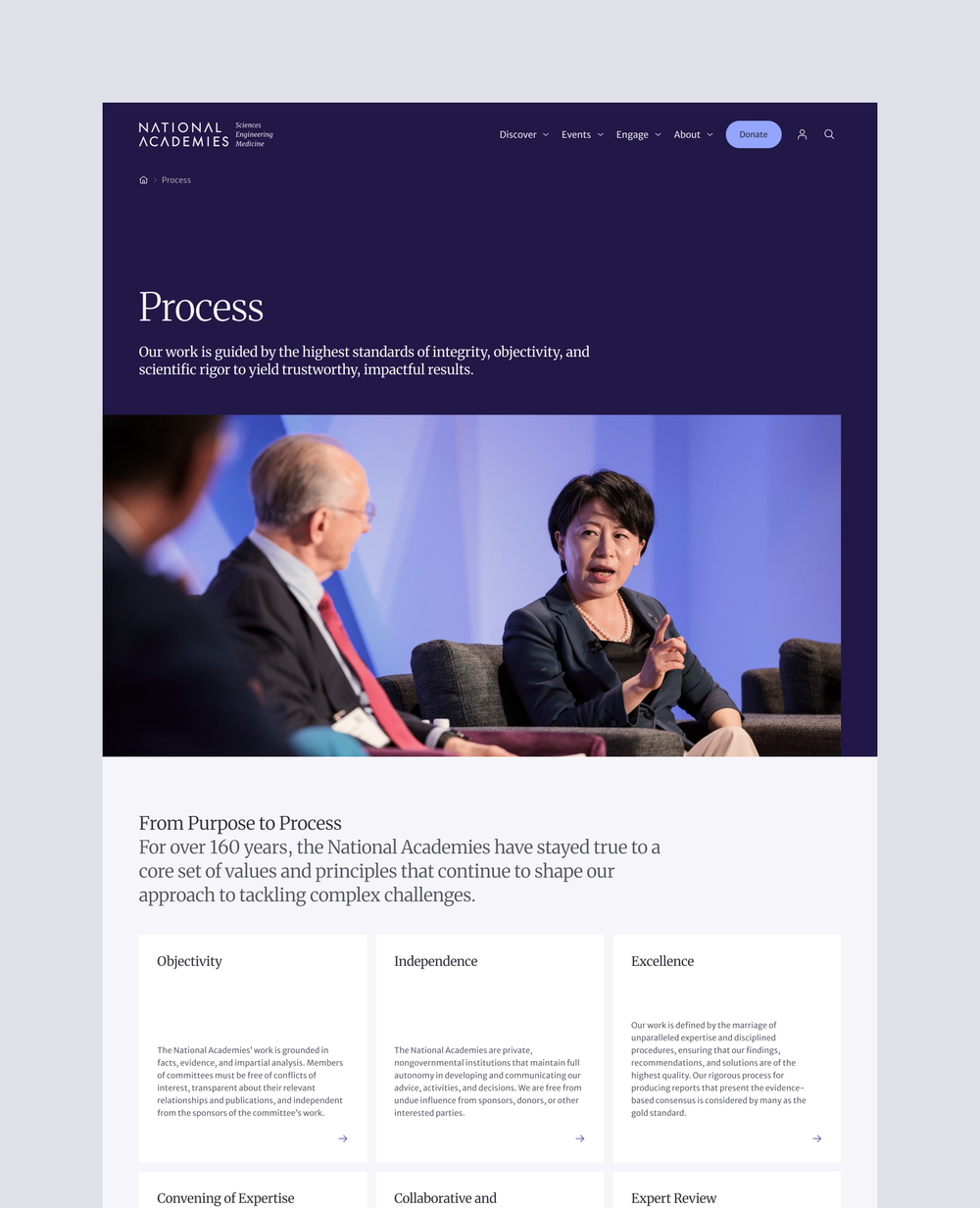
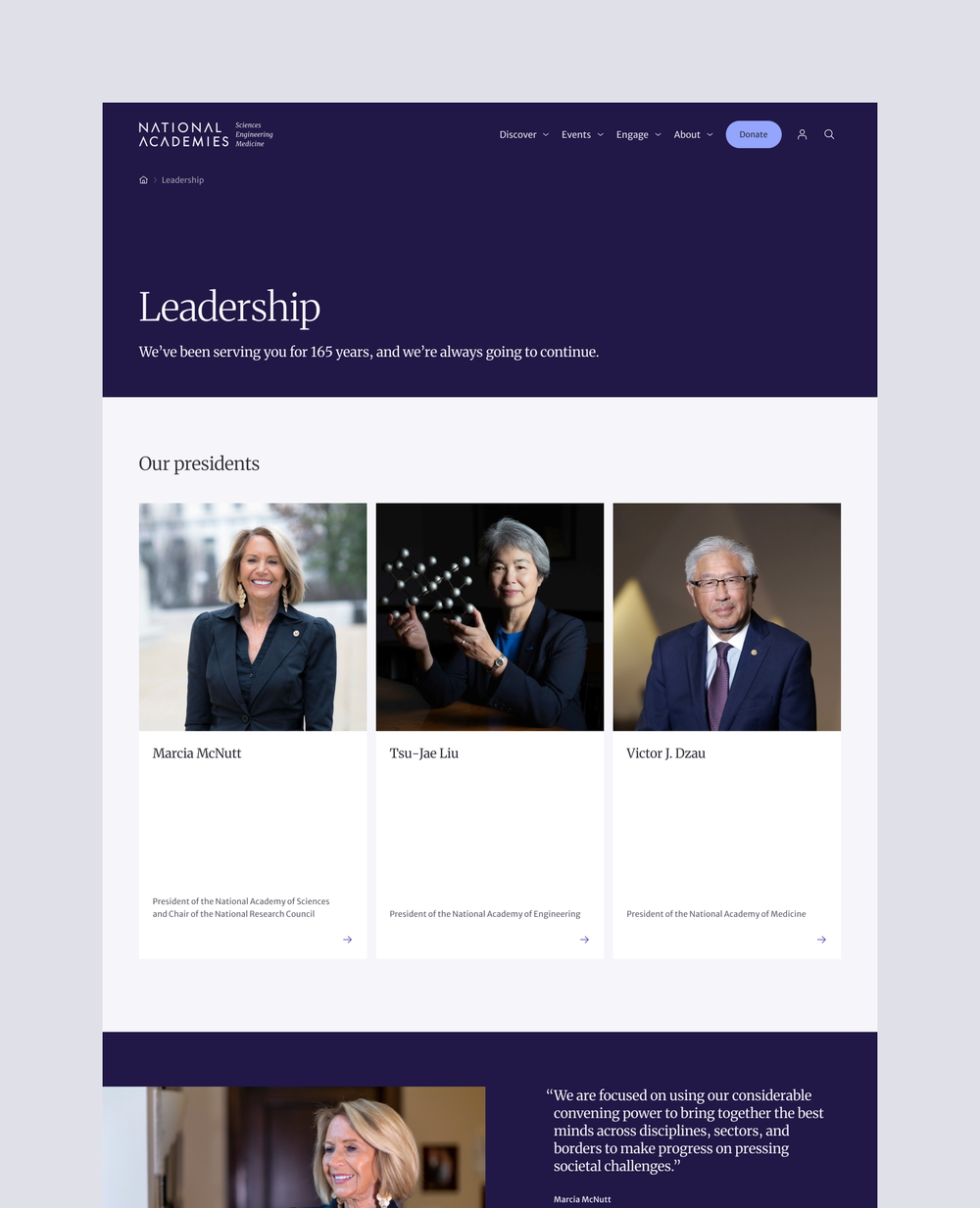
The experience also brings the institution’s human dimension forward. By highlighting the experts, committees, and collaborative processes behind the work, the platform tells a clearer story about the National Academies’ unique ability to convene leading minds and turn evidence into guidance.

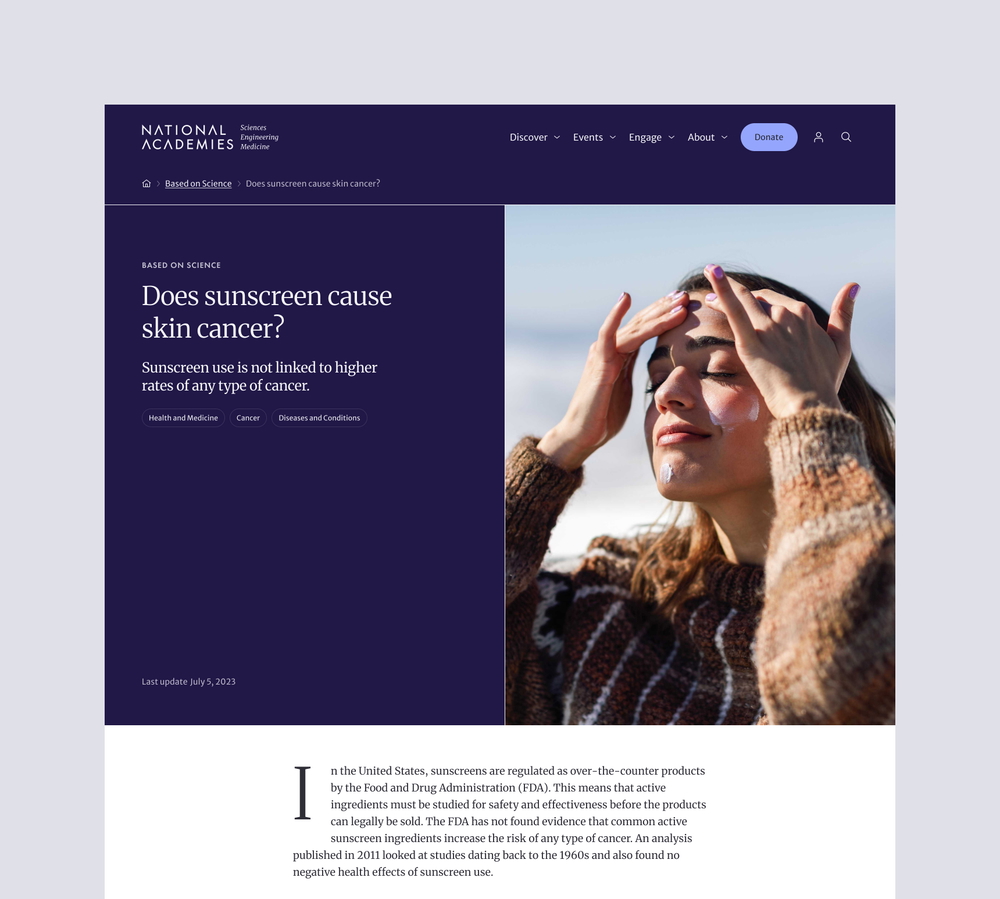
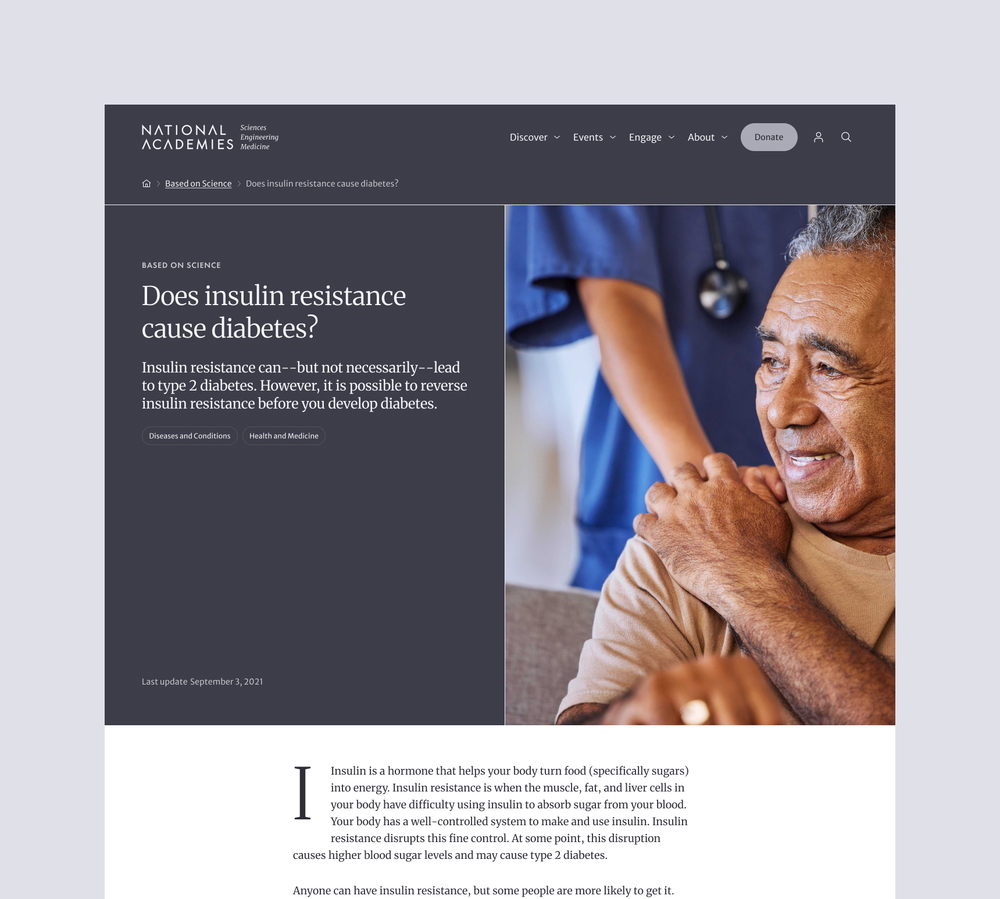
Nasem 02.01 based on science
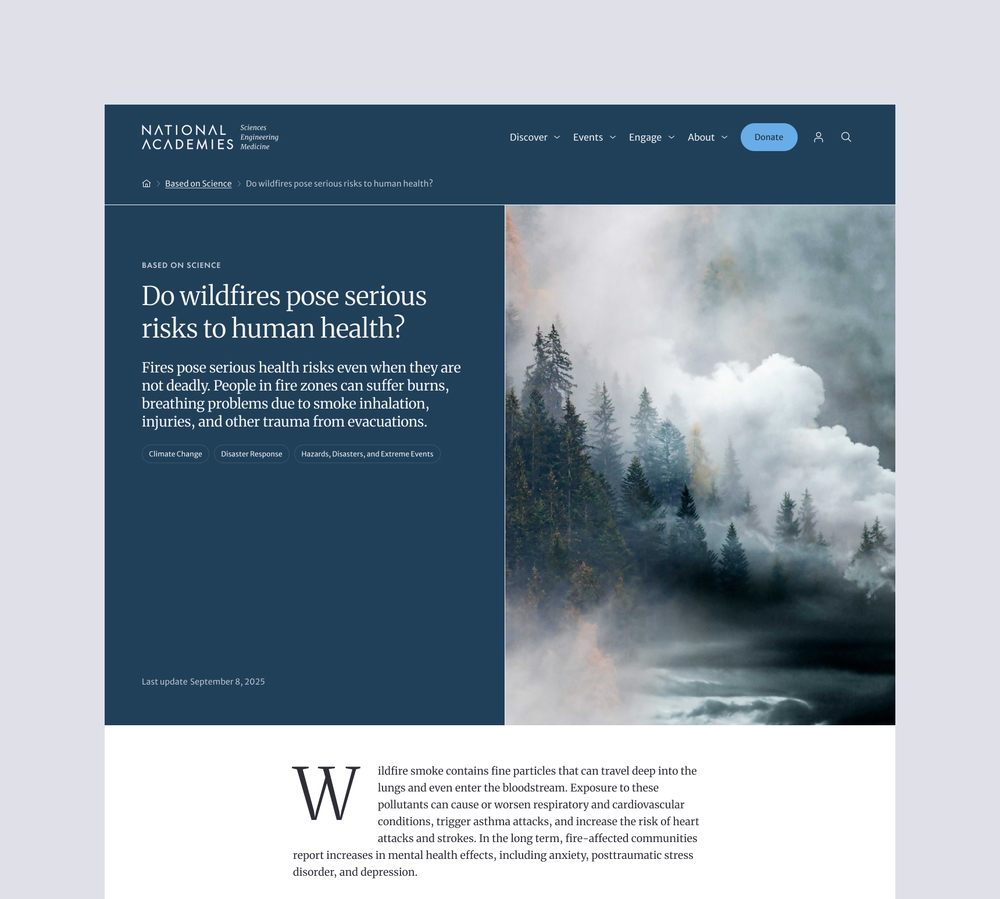
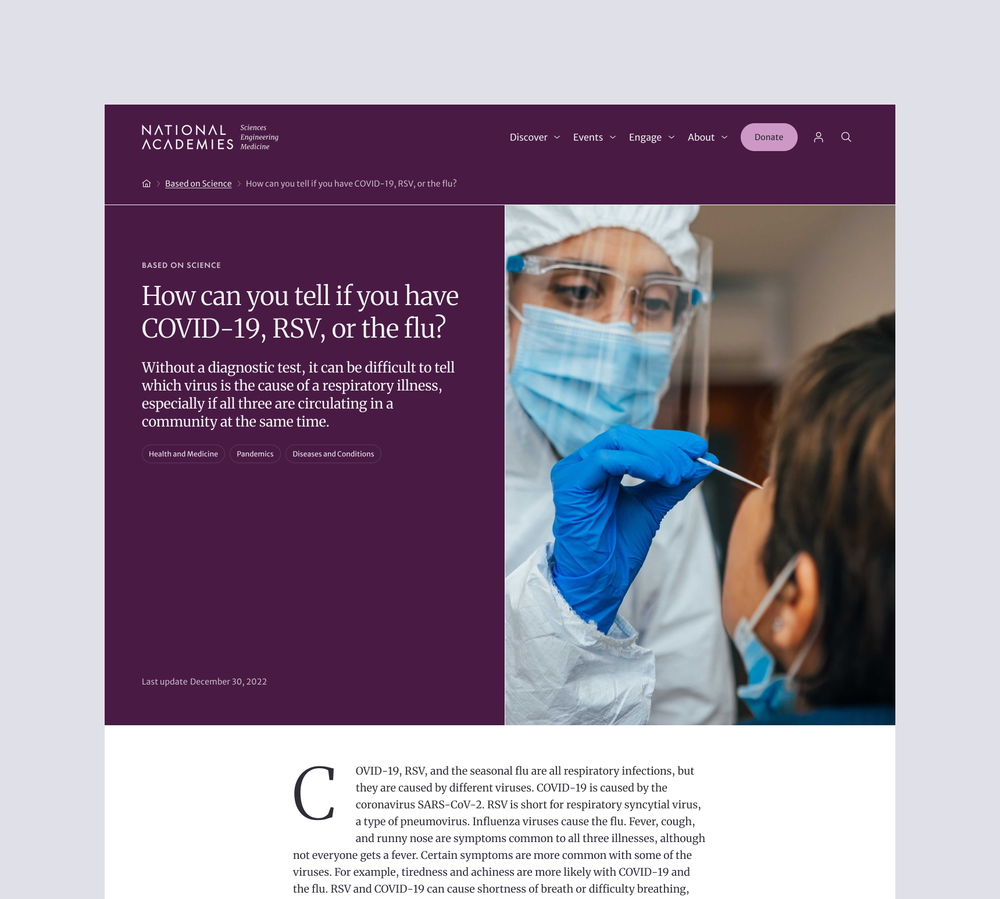
Nasem 02.02 based on science
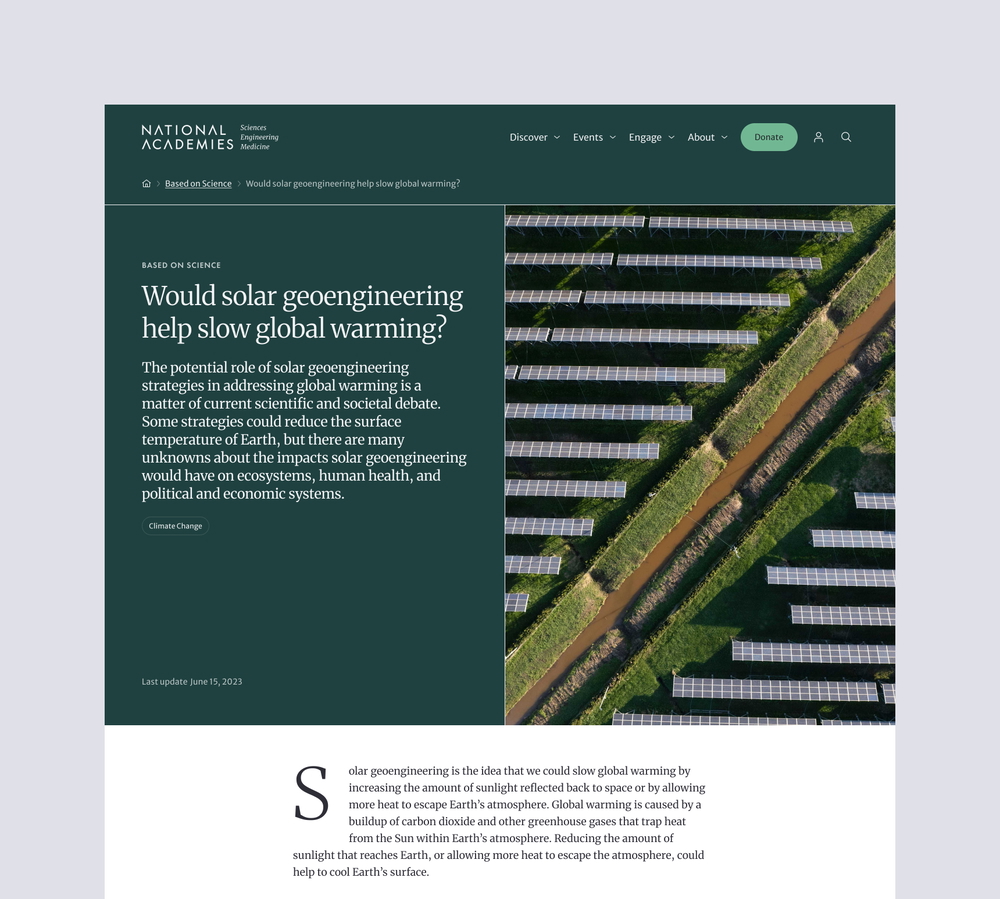
Nasem 02.03 based on science
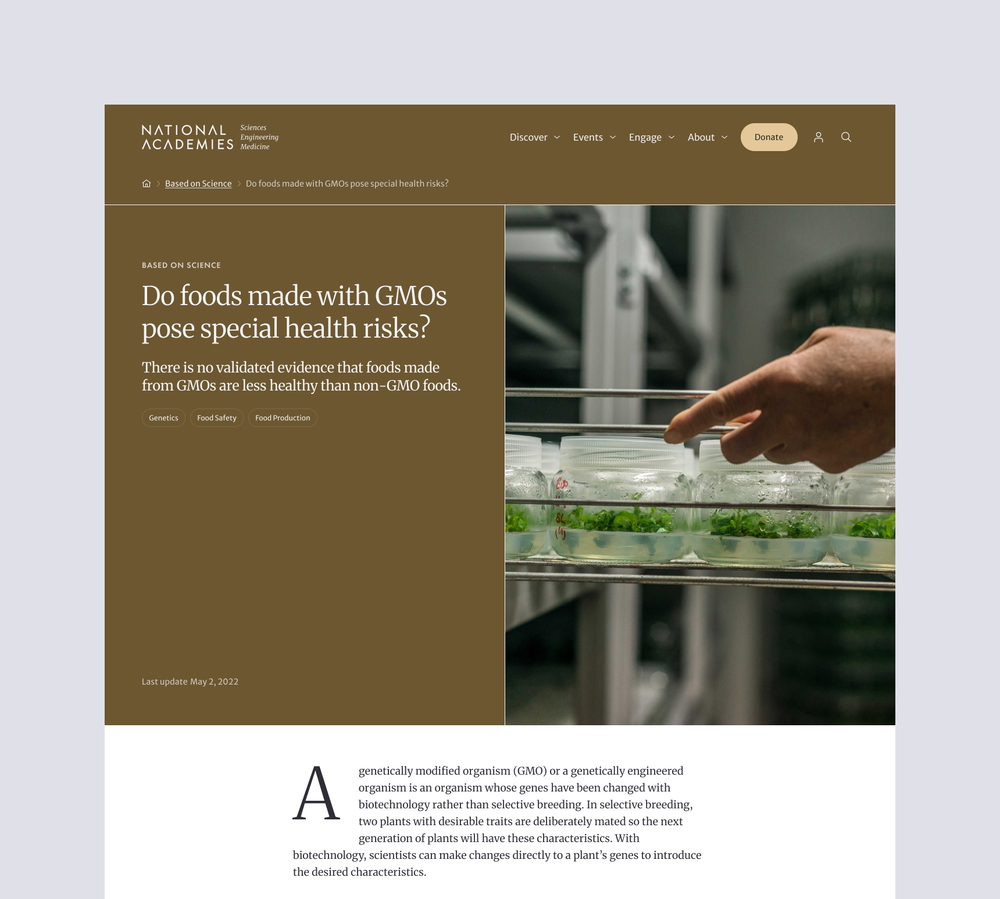
Nasem 02.04 based on science
Nasem 02.05 based on science
Nasem 02.06 based on science
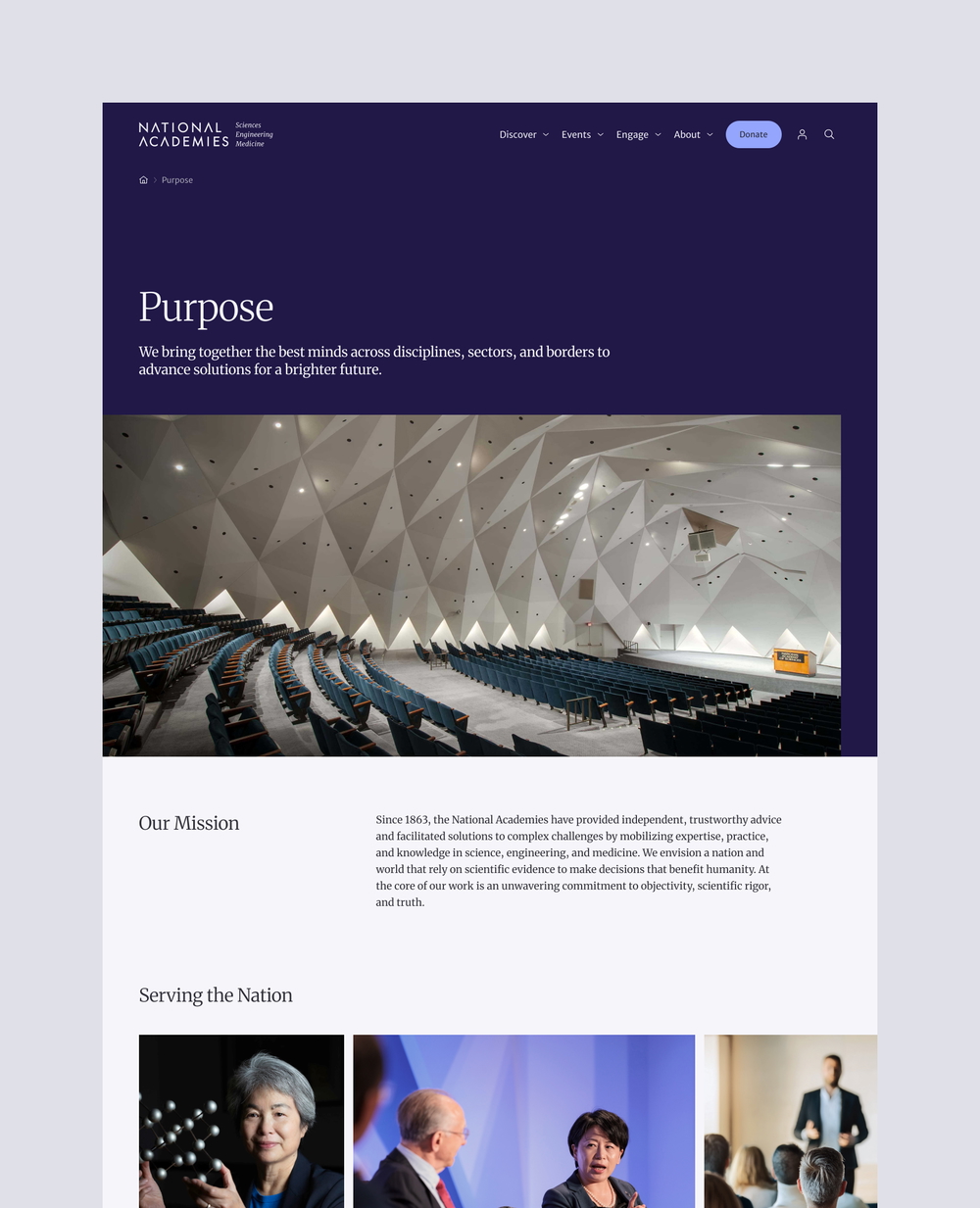
Nasem 03.01 purpose
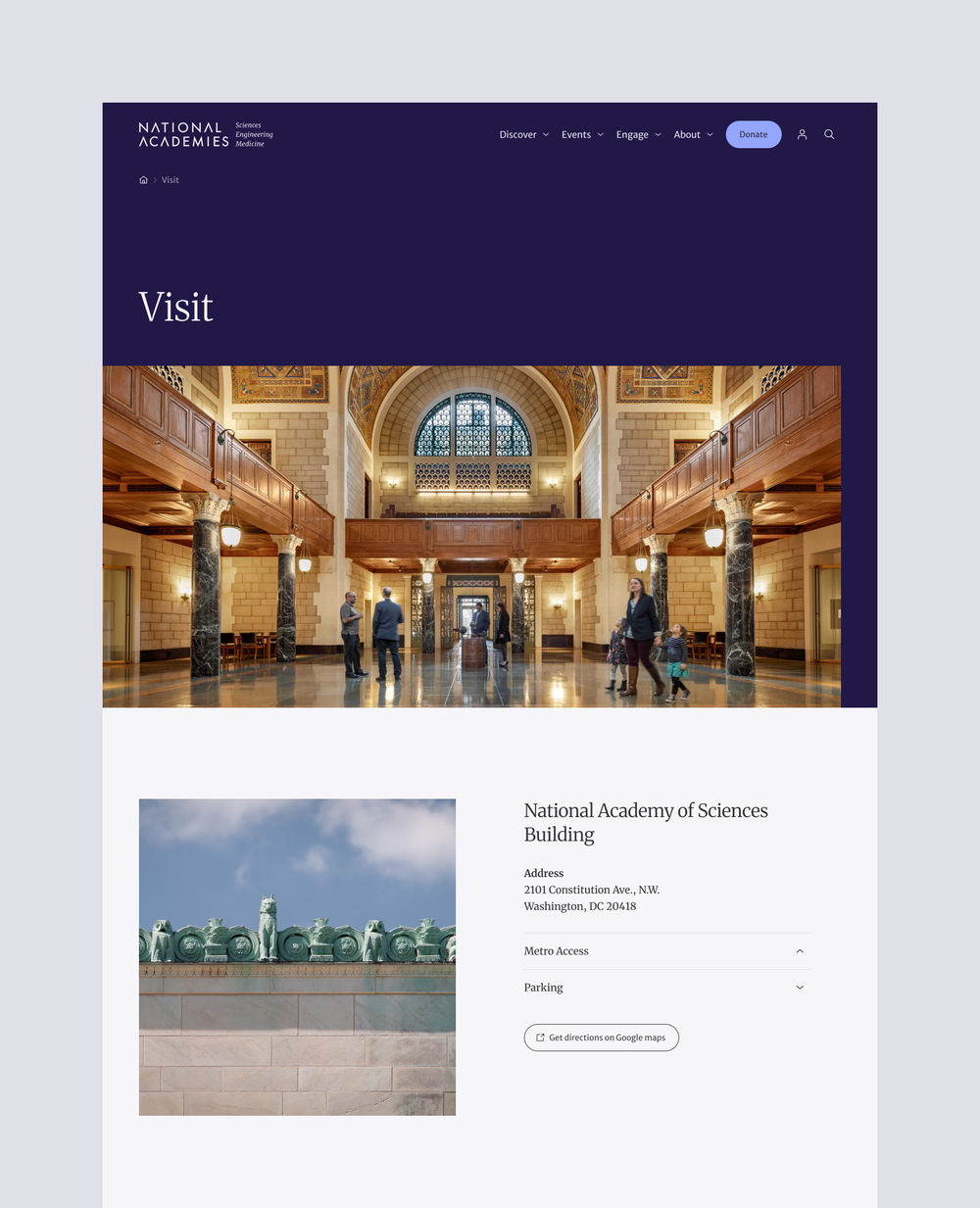
Nasem 03.04 visit
Nasem 03.02 process
Nasem 03.03 leadership

Building an intuitive system

We transformed the National Academies experience from a fragmented content archive into a connected, approachable ecosystem where users can clearly understand what the organization does and what they gain from it. 

Previously, the site often presented content out of context, making it difficult for users to see the bigger picture of the organization’s work and rigorous process. By unifying the design system, restructuring information architecture, and establishing more connectivity across content types, we encouraged users to move seamlessly across the site and explore the relationships between projects, processes, and output. What was once a disjointed and sprawling experience is now structured, intuitive, and purpose-driven, giving both users and internal teams the clarity and tools needed to communicate, discover, and scale the organization’s impact.

Nasem 05.01 topic hub
Nasem 05.02 topic hub

Empowering the entire organization

The transformation was not only public-facing. It also addressed a critical operational need: enabling teams across the National Academies to manage, publish, and maintain content more efficiently.

We introduced a flexible template system designed to support the full lifecycle of the organization’s work, from emerging topics and committee activity to published research and public engagement. This gives internal teams more autonomy while maintaining consistency across design, navigation, and content structure.

“During our agency search, we discussed the need for a contractor or a vendor. You always used the term 'partner', and that really was the right name for what you were.”

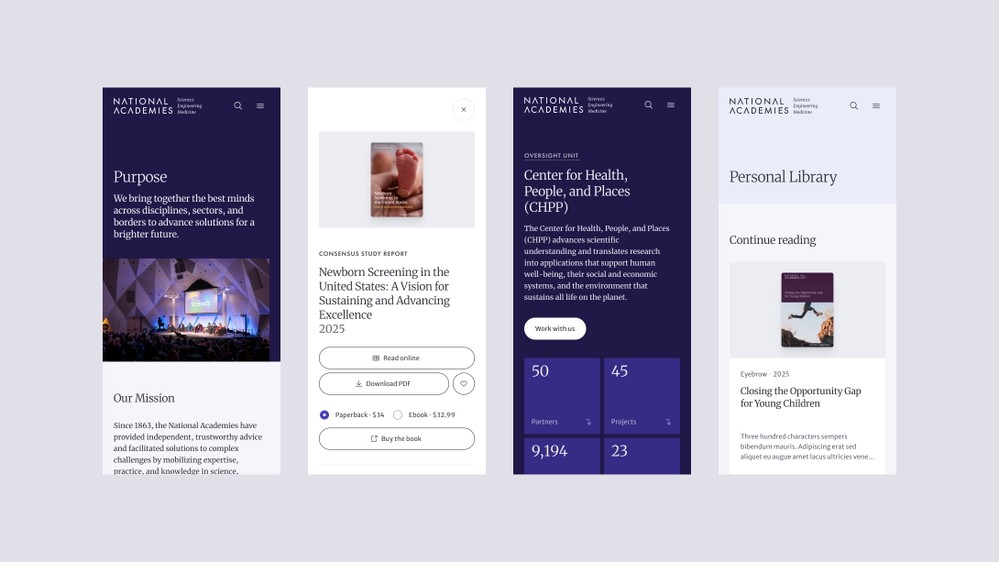
Nasem 07 mobile

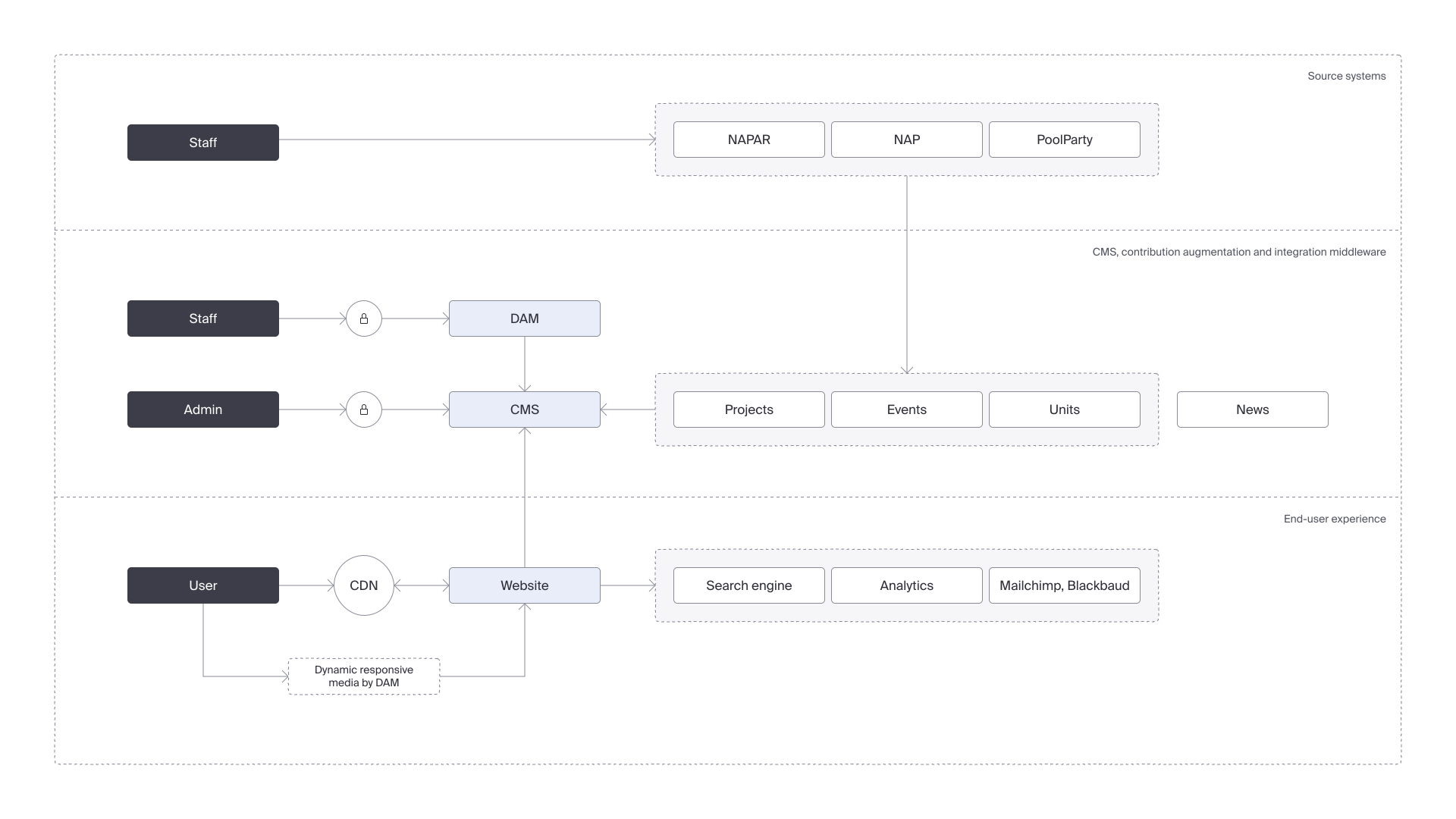
A redesigned data architecture and content model make the platform easier to search, maintain, and scale over time. At the same time, the new structure helped produce alignment across the organization, helping previously disparate units present their work consistently and tell the story of the National Academies and its mission with clarity.

Nasem 08 tech diagram

Up next

  • OXMAN

    OXMAN

    2022–2024

    System-level change through nature-centric design

  • From a local contemporary art museum to a global cultural institution